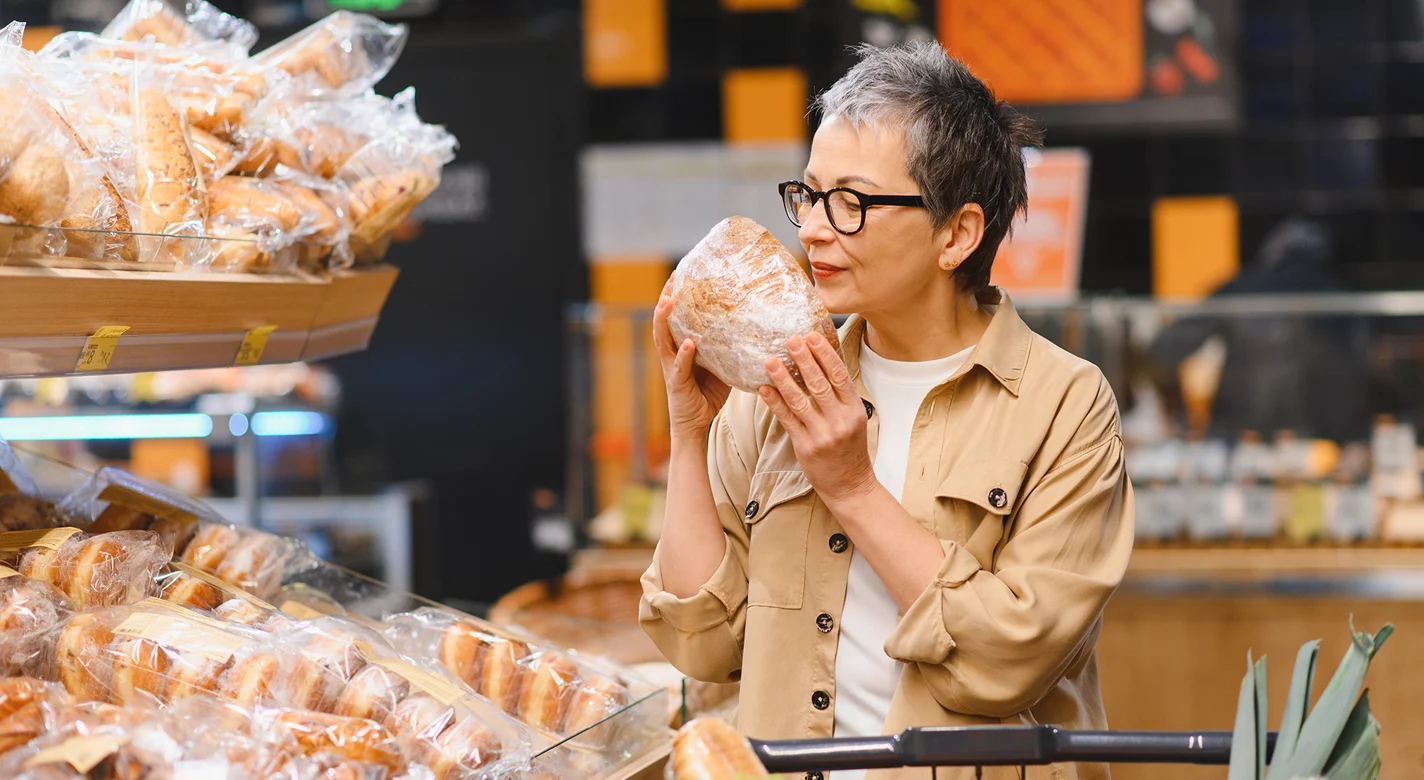
Managing the budget, time, mental energy, travel, promotions, convenience, and even the relationship with brands themselves. This is the modern consumer, taught by the crisis to compare, alternate, fragment, and have shopping missions. "Price may start a conversation, but what will close it is value ." This phrase will reappear several times in the following lines. But what is that value, after all? It can be price, yes, but also trust, freshness, clarity, convenience, speed, reward, belonging, pleasure, origin, ease, or simply the feeling that that choice makes sense at that moment.
There are decisions that seem small because they are repeated every day. What to buy? Where to buy? When to buy? Which brand to choose? Which promotion to take advantage of? Which trip to avoid? What to have for dinner? Which indulgence to maintain? Which category to cut? Which product to replace? These are decisions based on flyers, on... appFrom shopping carts and shared lists on mobile phones to family conversations at the kitchen table, these are all decisions that, when combined, tell the story of a profound shift in Portuguese consumption patterns.
The text could have started in a supermarket aisle, but it begins better with a phrase spoken on stage at the most recent edition of the Brands Congress, held in June by Centromarca at the Estoril Congress Center. In a panel dedicated to the consumer, Marta Santos, country manager for Portugal at Worldpanel by Numerator, hit the nail on the head regarding the topic we are discussing in these lines: “The consumer is no longer just a consumer. They are a manager. They are a manager of their money. They are a manager of their needs. They are a manager of their limitations. And, yes, they are a manager of time.”
The idea seems simple, but it isn't. Because saying that the consumer is a manager means that each purchase now competes with other invisible decisions: mortgage payments, rent, children's food, commuting, remote work, lack of time, tiredness, dinner that needs to be prepared, the fear of waste, the desire to maintain small pleasures, the pressure to save money, and the need to feel that one is making a good choice. Thus, the Portuguese consumer no longer enters a store simply to buy products. They enter to solve problems. And that difference changes everything.
Indeed, after four crises in less than two decades, the Portuguese consumer has learned to live on high alert. The new value in consumption is born precisely here: at the point where buying has ceased to be a simple act and has become a choreography between money, time, trust, convenience, desire, and control. The consumer designs their own value map, and does so because they need to fit what they are looking for into their budget. And one of the data points presented by Marta Santos gives the full dimension of this challenge: “Between 2019 and 2025, Fast Moving Consumer Goods suffered strong inflationary pressure, which increased average spending by more than 900 euros, while the impact of average wages fell short of 500 euros. The result is a permanently unbalanced equation,” she explained.
It is in this imbalance that another key phrase of this text is born: "Price may open the conversation, but what will close it is value ," emphasized the country manager of Worldpanel by numerator.
Today, a brand no longer competes only with others in the same category, but with alternative solutions for the same context.
Unstable normality
Now, if for years the retail sector talked about journeys, today, perhaps it's better to talk about missions. Marta Santos defined it again in an exemplary way: "It's as if the consumer has done a postgraduate course in adapting and surviving successive shocks ." For them, the purchase is no longer automatic. And neither is customer loyalty. "Each category, each store, and each brand has to win back the consumer, mission by mission ," she warned.
At the heart of this evolution is the fact that consumers have entered a kind of unstable normality. As the consultancy Euromonitor rightly notes, the war between the United States and Israel and Iran in 2026 already marks the fourth major economic disruption in consumer markets in less than two decades. And each of these disruptions has contributed to the consumer we have today. The 2008 crisis brought trading down , trained price and alternative demand; Covid-19 reorganized the economy and accelerated digitalization, delivery, and convenience; the war in Ukraine once again placed inflation, energy, supply chains, and insecurity at the center of decisions. In fact, consumers have already learned to live in crisis and now want to learn to live better within it.
Stocking up on groceries, preparing dinner, saving money in a certain category, trying something new, taking advantage of a sale, buying better for the kids, choosing something healthier, avoiding a commute, or having items delivered to your home that previously required time and effort… Today, every purchase is an equation between money, time, convenience, trust, and reward. The lessons learned from the crisis have not only produced defensive consumers, but also trained consumers, more demanding in their understanding of what they get for what they pay. And less willing to accept that price alone explains everything.
The game of compensations
The consulting firm McKinsey helps to put the phenomenon into perspective. In Portugal, the food market grew by 5,2% in 2025, above the 3,1% recorded in Europe, and showed real growth of 2,3%, compared to 0,5% on average in Europe. But this recovery coexists with a less comfortable sign: in volume, the Portuguese market continued to contract, with a drop of 0,5%, while Europe grew by 0,6%. In other words, there is more value circulating, but not necessarily more product entering the home. Does this mean that the consumer has left the market? Not at all, but the way they move within it has changed. This is the new landscape: the consumer is not simply cutting back. They are redesigning.
At the same time, private label brands reached 47,7% of sales in Portugal, significantly above the European average of 40%, confirming the country as one of the most advanced markets in Europe in this dimension. But McKinsey shows that it has ceased to be just a price alternative, now also competing on differentiation, quality, innovation and responding to specific needs. It is no longer just about "private label," but about own-brand products with identity, premium categories , organic and local solutions, free-from options or products tailored to new lifestyles.
Similarly, convenience is no longer a secondary consideration. The report identifies a generational shift driving the growth of foodservice and ready-to-eat or ready-to-heat solutions . Among European consumers, 82% of Generation Z consume grab-and-go meals at least once a month. Immediate consumption, once peripheral in the food sector, is becoming a territory for growth and differentiation.
The consumer, therefore, is not just reducing. They are rebalancing. They might buy store brand in one category, but pay more for freshness in another. They might look for a discount in one store, but choose convenience at another time. They might go to the supermarket to better control their purchase and order delivery when time is more valuable than the trip. They might look for price, but not give up on trust. The new value lies in this game of trade-offs.
With an open map
It is within this context that the conversation between Marta Santos and Clara Cardoso, founder of C-The Consumer Intelligence Lab, moderated by Vânia Fiuza, country manager of Dr. Oetker, at the Brands Congress, becomes particularly revealing. The starting question was simple: what has really changed? Not only in the market, but in people? The answers immediately shifted the conversation from the product to behavior.
In fact, shopping is no longer a straight line. As Marta Santos described it, "it's as if the consumer has an open map on the table and is placing pins on the stores where they want to buy a certain category or brand ." They don't always find everything in the same place. Moreover, they don't always want to find everything in the same place. The figures provided by Worldpanel by Numerator help to understand the scale of this change: 41% of consumers visit seven or more different stores. The act of shopping is fragmented because the mission is fragmented.
The logic of missions changes the nature of competition. Today, a brand no longer competes only with others in the same category, but with alternative solutions for the same context. The example of frozen pizza mentioned at the congress illustrates well this shift in decision-making from category to context: what problem am I solving? It could be a quick dinner. It could be time. It could be a frictionless evening. It could be a solution for arriving home and not having to cook. And this frozen pizza competes with delivery , takeaway , leftovers, ready-made soup, eating out, delayed hunger, tiredness. This is where many brands still fail: they continue to sell product when the consumer is buying context.
But there is another strong idea to take away from this conversation at the Brands Congress: retail as the “playground of the Portuguese .” It’s a provocative but accurate image. The expression used by Clara Cardoso is apt because it captures something that data sometimes doesn’t explain: there’s enthusiasm in the way many consumers follow promotions, reward programs, new products, brochures, apps … Just as shopping malls were, at one time, places for strolling, aspirational consumption, and belonging, retail, particularly food retail, has become today a daily territory of discovery, comparison, and reward.
This transformation is linked to the “first shock” of financial education in Portugal. As the founder of C-Lab rightly noted, there has never been so much content on financial literacy, saving, money management, accounts, comparison tools, podcasts , and specialized platforms. “More than 60% of the Portuguese population says they have consumed content to better manage their money in recent years ,” she mentioned. There is, in fact, more agency over money, and this has spilled over into consumption. Consumers no longer simply receive promotions. They follow them. They manage them. They compare them. They integrate them into their personal purchasing plan. Reward and loyalty programs have ceased to be merely marketing tools and have become instruments of household management.
“It’s as if the consumer has completed a postgraduate degree in adapting to and surviving successive shocks.” For him, purchasing is no longer automatic. And neither is customer loyalty. “Each category, each store, and each brand has to win back the consumer, mission by mission.”
The house as a point of sale
But there is also a very relevant social and cultural dimension. Clara Cardoso drew attention to the fact that there are two realities among Portuguese consumers, with a divide between younger and older generations, heavily influenced by the themes of home and emancipation.
At the same time, there is a paradox surrounding time: the Portuguese feel their daily lives are more hectic, but some indicators point to time gains compared to 2015, especially among the active population and those who can work remotely.
Thus, the home has become more central. Clara Cardoso even spoke of a "domestic empire ," an idealization and intensification of what happens at home: there is more domestic consumption, more remote work, more leisure. But within that same home there is also a small screen that accelerates everything, the smartphone , identified as the device on which consumers up to 65 years old consume the most leisure content at home.
Thus, consumption now happens between the store, the app , the sofa, the kitchen, the feed , the digital brochure, and delivery. The home is no longer just a destination for consumption; it has become a starting point, a destination, and often a point of decision. The " bring it to me" economy is not just about convenience, but about a new form of consumer power, which also modifies the battle for brands to be chosen even when the consumer doesn't leave home.
Two realities, many speeds.
Now, while it's true that we have two realities in consumption, perhaps it's not so certain that there are only two speeds. There are many. The same person manages different speeds in different situations. One day, they might want to go to several stores to optimize the price, but another day they might also want to pay for delivery if time is a critical variable. They might spend more time at home but want to cook less. They might look for store brands in one category and manufacturer brands in another. They might buy on sale during the week and for pleasure on the weekend. People manage the speed that interests them in each situation, with much more power of choice.
It is therefore not surprising that, when asked about the biggest mistake brands continue to make, Marta Santos pointed to centralization. Brands that are too centralized, too detached from real daily life, risk not understanding what gives consumers a reason to buy from them. The battle is no longer just about setting a price. It's about creating meaning. And meaning implies proximity, local understanding, adaptation, listening, presence on the ground, experience, and comprehension of real missions.
Brands need to help consumers manage their finances: budget, time, goals, and values. They need to be "alongside the consumer , " "in the field with the consumer ," so that the consumer can find a purpose in them that fits into their life. And it is at this point that we go to Aldi and Intermarché, in search of evidence on the ground of this new value in consumption.
“The consumer is no longer just a consumer. He is a manager. He is a manager of his money. He is a manager of his needs. He is a manager of his limitations. And, yes, he is a manager of time.”
The sophistication of simplicity
At Aldi, the proposition seems simple: reduce complexity to increase trust. Less noise, more focus. In a market saturated with choice, simplicity can be almost disruptive.
That's why assortment optimization is a strategic choice and a characteristic of the German brand's business model. André Fradinho, managing director of Supply Chain Management at Aldi Portugal, explains that, as a discount retailer , they seek to focus on the essentials and guarantee high-quality products at low prices. In this sense, approximately 85% of the products available in stores are private label. The logic is clear: closely monitor the process, ensure turnover, quality and freshness, and allow the consumer to find what they need easily and quickly.
But the most relevant point lies in the link between simplicity and consumer behavior. “Today, with consumers increasingly informed, demanding, and also pressured by lack of time and reduced family budgets, complexity or excessive choice can often hinder the decision ,” argues the spokesperson. Therefore, the optimized assortment responds to a concrete need: in a time of excess, clarity is valuable. Consumers don't necessarily want more options, but better answers. They want relevant solutions that meet their needs and inspire confidence.
The new essential
The notion of "essential" has also changed. For Aldi, an essential product is no longer just a basic good in the traditional sense, but one that meets the real and recurring needs of the consumer in their daily life, based on their eating habits, routines and priorities.
At the same time, this essential has become more demanding. The consumer is not only looking for functionality; they are looking for high quality and, whenever possible, additional attributes that add value, such as freshness, origin, and sustainability. “The essential has ceased to be merely the 'basic' and has become that which delivers real value and consistency ,” notes André Fradinho.
Aldi's assessment is particularly significant because it comes from a discount retailer . The spokesperson acknowledges that price remains a decisive factor in the purchasing process, however, "it is no longer the only driver ." Today's consumer evaluates the value proposition more holistically, considering trust in the brand, its values, the consistency of the offer, and the shopping experience: "It's not just about 'how much it costs,' but rather the 'value of the product.'"
This redefinition is one of the keys to the new value in consumption. The consumer doesn't necessarily want to buy less, but wants to buy with more meaning. They want the basics not to seem poor, the affordable not to seem resigned, and the private label not to be a concession, but a good decision. And at Aldi, André Fradinho emphasizes, it's more than just a price alternative. It's an offer designed to accompany different lifestyles, consumption habits, and dietary needs, always focusing on quality: BIO, for example, caters to vegetarian, vegan , flexitarian, and organic diets. And MILSANI keeps up with innovation in dairy products, particularly in protein-rich options, aligned with new needs and lifestyles.
Value as operational efficiency
Low prices and simple operation no longer, by themselves, explain the value proposition of the modern discount model . The model has evolved. “It’s no longer just about guaranteeing low prices. It’s about offering a complete value proposition, supported by a highly agile, precise, and resilient supply chain ,” describes the managing director of Supply Chain Management at Aldi Portugal.
Packaging, for example, is not just a container, but also a tool for productivity, sustainability, convenience, and trust. André Fradinho mentions the reduction of unnecessary materials and the focus on recyclables, the incorporation of recycled plastic whenever possible, and reusable solutions for fruits, vegetables, bread, and pastries. He also points out that, in the discount model , packaging is a productivity tool: many products are displayed directly in the transport box, speeding up restocking and reducing costs.
The perception of value is therefore also presented as a direct consequence of operational efficiency. Simple operation reduces complexity and waste, allowing each product to reach the store quickly, without friction and at the lowest cost, without compromising availability, quality or freshness. This means that the operation is no longer in the background and has become part of the brand proposition.
"Ultimately, value today is built on the ability to listen, adapt, and act. Not just through the product or the price, but through a business model that is close to people and can evolve with them."
The commitment to proximity
Now, if Aldi embodies the new value through simplicity and efficiency, Intermarché does so through proximity, territory, and trust. Mário Costa, general manager of the brand in Portugal, starts from the context of instability that has become the new normal: war in Ukraine, conflicts in the Middle East, energy, fuels, raw materials, persistent inflation, exchange rate fluctuations, and extreme weather events. All of this puts pressure on costs throughout the chain and inevitably reaches the consumer. Therefore, the consumer has become "more rational, selective, and demanding ." They no longer just look for the lowest price, but for "security in the decision" : understanding that they are making the best possible choice within their budget. "It is precisely within this framework that Intermarché reinforces its responsibility. More than reacting to the context, it seeks to mitigate it on the consumer's side through rigorous cost management, investment in competitive private labels, promotion of local production, reducing external dependencies, and a fair and consistent pricing policy ," he describes.
From this, it becomes clear that, for Intermarché, the concept of value is no longer just a commercial proposition but a commitment to helping consumers live better in a more difficult economic context. This is why proximity becomes a central focus. For Mário Costa, “authenticity is truly the key word .” It's not enough to tell a good story, as customers quickly distinguish real proximity from mere rhetoric. In the case of Intermarché, this proximity translates into knowledge of the habits of each community, adapting the local offerings, and working side-by-side with regional producers.
This model is particularly relevant because each store is linked to a business owner who knows the territory, follows consumer habits, identifies specific needs, and understands the changes happening in the community. This local listening isn't limited to the point of sale. It's transformed into useful information for the organization, allowing them to adjust product ranges, reinforce categories, adapt campaigns, and respond more precisely to what customers are looking for. To their missions. "Ultimately, value today is built on the ability to listen, adapt, and act. Not just through the product or price, but through a business model that is close to people and can evolve with them ," explains Mário Costa.
Promoting national production
It is in the fresh produce category that this transformation becomes most evident. Consumers are more informed, more attentive, and more demanding. They want to know where the product comes from, how it was produced, and whether they can trust what they are choosing. Origin, freshness, and trustworthiness have ceased to be accessory attributes and have become central to the decision-making process. “A fresh product is not only valuable for its price, but for the benefit it delivers ,” says Mário Costa succinctly. “Nobody wants an apple that looks good on the outside but tasteless on the inside. The customer wants products that deliver on their promise, that have a good appearance, yes, but also texture, aroma, and true taste . ”
It is in this context that initiatives such as the Origens Program gain relevance, by valuing national producers, closer supply chains, and products with identity, quality, and authentic flavor. In fact, the appreciation of national production also emerges as part of this new understanding of value. Over the last decade, the Intermarché National Production Award has sought to highlight projects that innovate, create jobs, and contribute positively to the country. For the brand, national production is more than a commercial argument. It is a way to strengthen trust, support the territory, and respond to consumers who want to make more conscious choices.
Delivering benefits
And when it comes to benefits, at Intermarché, private label brands also play a central role. The spokesperson states that it is one of the main ways to deliver value to the consumer, because it allows combining quality, trust, and competitive prices across various everyday categories. "In many cases, it's already the first choice for purchase ," he argues.
The evolution of private label brands reflects the growing diversity of consumer needs. Some seek essential products, indulgent options, healthier choices, premium ranges , or more sustainable options. Private label brands must respond to these different consumption moments with innovation, improved perceived quality, and clearer positioning. Intermarché has a plan to specialize its private label brands by consumer segment, so that each brand is recognized as a specialist and the customer can easily identify its value proposition.
Formats and packaging also reflect new lifestyles and express new values. There are larger families, people living alone, faster-paced routines, consumers mindful of waste, and customers seeking practical solutions without sacrificing quality. This translates into smaller packs , but also into family-friendly formats, more functional packaging, and solutions tailored to the reality of each home.
And there is a particularly relevant trend: more and more people want to eat at home, eat better, and have convenience at the same time. They are looking for tasty, balanced, and practical meals that fit into their daily lives without requiring preparation time. Intermarché responds with food prepared in-store and with the evolution of its takeaway range.
Consumers are not just looking for functionality; they are looking for high quality and, whenever possible, additional attributes that add value, such as freshness, origin, and sustainability. "The essential has ceased to be merely 'basic' and has become what delivers real value and consistency."
The price no longer fits on the price tag.
In the end, what this data, these stages, and interviews show us is that value has freed itself from the price tag. It's still there, on the shelf, visible, unavoidable, but it's no longer enough. The question is no longer just "how much does it cost?". It has become "what does it solve for me?". Does it solve the budget? Does it solve dinner? Does it save time? Does it solve confidence? Does it solve choice? Does it solve freshness? Does it solve routine? Does it solve belonging? Does it solve the feeling of control? We return to the starting point and the idea that ran throughout the text: "Price opens the conversation, but it is value that closes it" . The new value in consumption is this: the shift from a purchasing economy to a management economy. And perhaps the greatest disruption is this: for years, brands and retailers asked how to bring the consumer to the product. Now they have to ask how to bring the product to the mission.
This article was originally published in issue no. 99 of Grande Consumo.
Advertise with us!