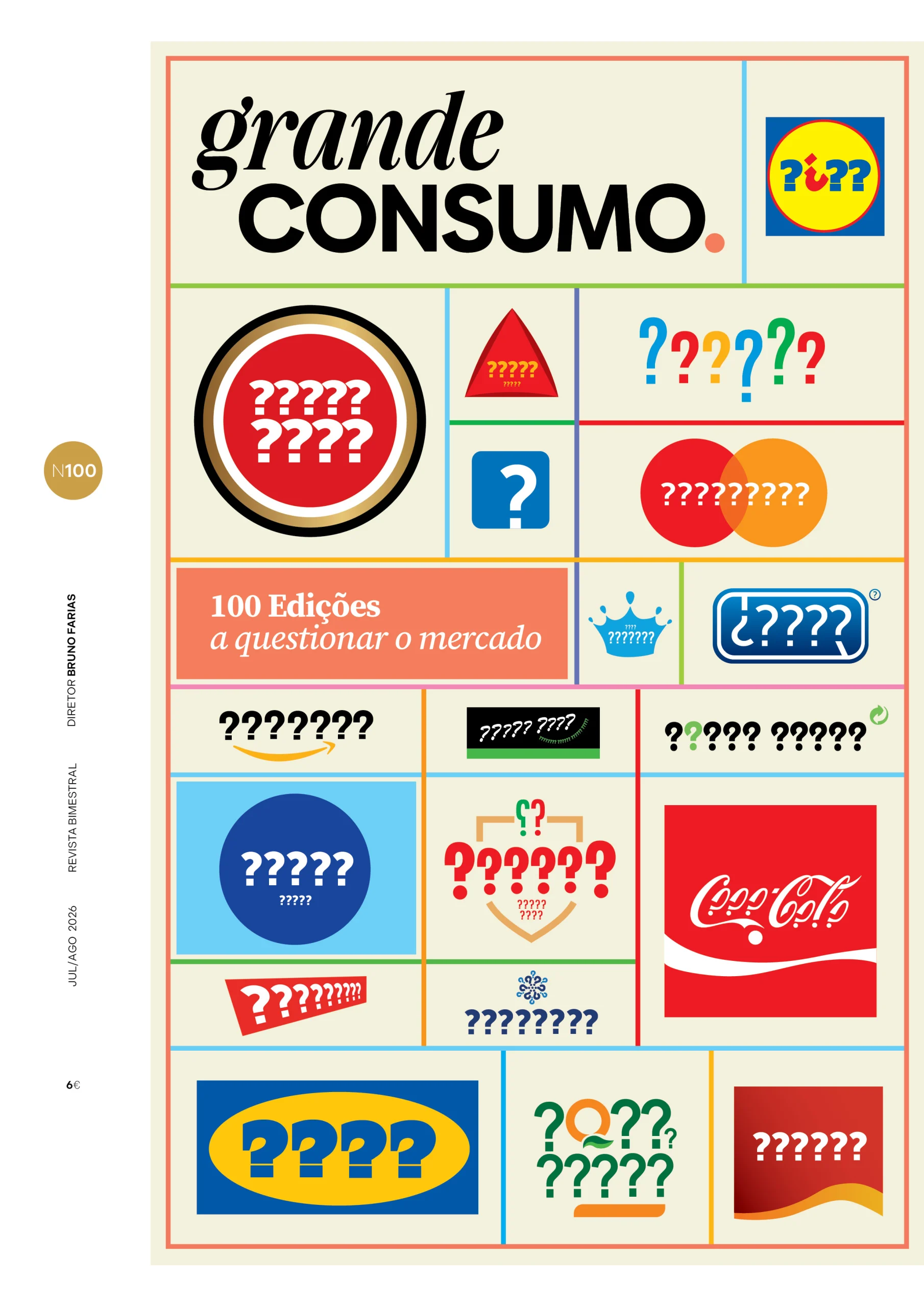
Do smartphone From the circular economy to instant comparison and logistics automation, two decades have profoundly changed the relationship between consumers, brands, and retail. For the 100th edition, the Grande Consumo [The company] challenged its LinkedIn community to identify the most significant transformations. The responses are not intended to be a representative study, but serve as a revealing portrait of the changes that have been etched into the perception of those who follow the sector. And they tell a fairly clear story: the consumer has gained power, purchasing has become borderless, and technology has become the invisible infrastructure of almost everything.
Twenty years ago, a consumer entered a store with far less information than the retailer or brand had available. Today, the opposite is often true. They know how much a competitor's product costs, they've read reviews, watched a video, and compared features. They have a loyalty card on their mobile phone. They can buy there, look elsewhere, or simply give up. They can complain publicly, praise a brand in front of thousands of people, or discover an alternative without ever entering a store. The power has shifted.
It was this change that we sought to observe through ten questions posed to the community of Grande Consumo On LinkedIn, we explored ten areas: consumer, purchase, store, price, brands, product, technology, health, sustainability, and logistics. The responses revealed unexpected consensus, near-perfect divisions, and even some particularly interesting zeros. Because sometimes, what nobody votes on also helps us understand how consumption has changed.
100% of the responses indicated instant price comparison as the change that most altered the consumer's relationship with price. Permanent promotions, strengthening private label brands, and value beyond price did not receive any votes.
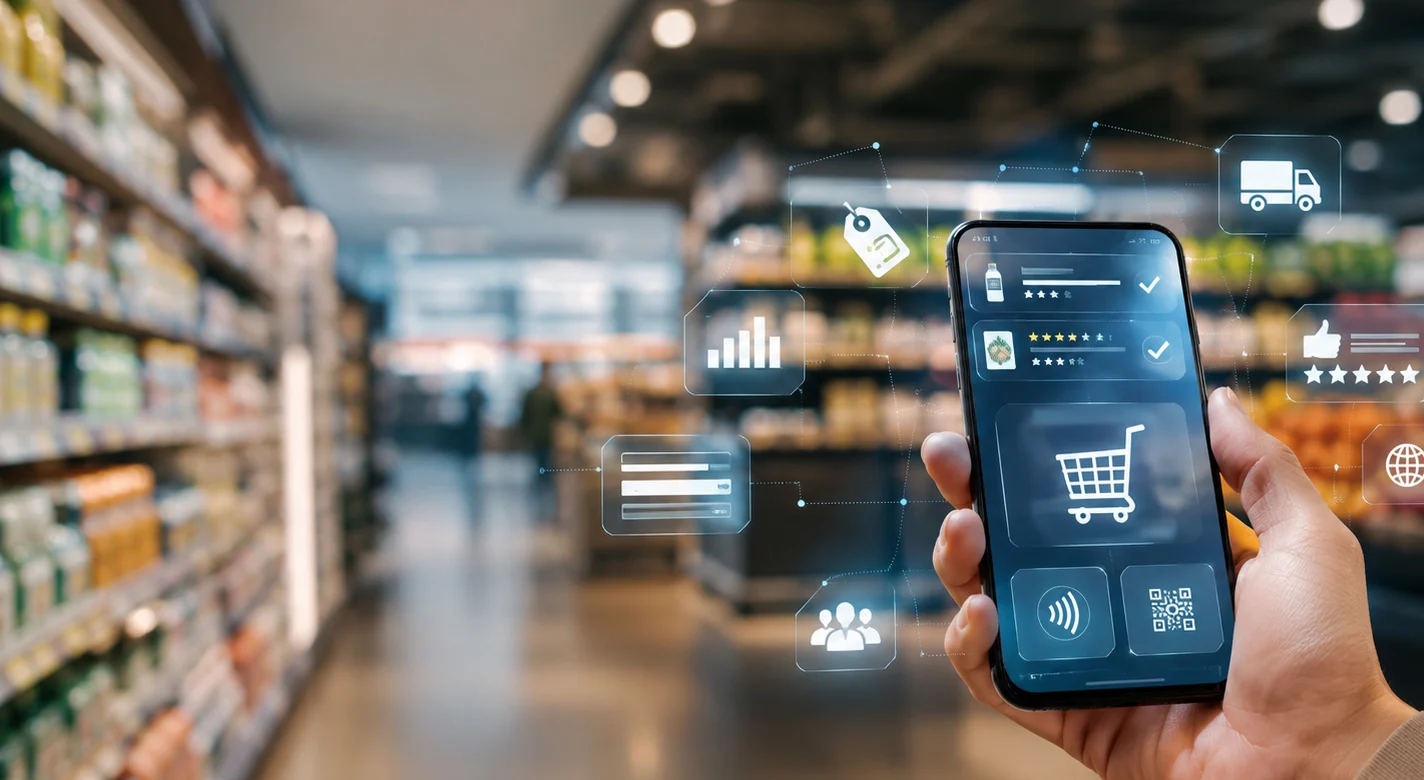
The world now fits inside a smartphone.
When we asked which change had most transformed the consumer in the last two decades, there was little hesitation. The use of smartphones in daily life garnered 67% of the responses. The ability to shop anytime and the existence of a more informed consumer both received 17%. Price comparison in seconds received no votes.
The paradox is only apparent. Comparing prices, buying anywhere, searching for information, consulting opinions, or engaging with a brand are now behaviors so closely associated with smartphones that they are almost no longer perceived as independent transformations. The phone has ceased to be just a phone. It's a store, a wallet, a catalog, a comparison tool, a map, a loyalty card, a customer service channel, a means of communication, and a shop window. If it were necessary to choose an object that symbolized the transformation of consumption since the beginning of this century, there would hardly be a stronger contender.
But the impact goes far beyond e-commerce. The smartphone brought the digital world into the physical store itself. It allowed users to compare products while browsing the shelves, search for additional information about a product, use coupons, pay, or receive personalized offers.
Shopping is no longer a place
In the second question, about which change has most transformed the way we shop, the community was essentially divided between two sides of the same transformation. E-commerce garnered 57% of the responses, and shopping via smartphone 43%. Faster deliveries received no votes.
Here's another structural change. For much of retail history, buying involved travel. You had to go somewhere, at a certain time, find a specific product, and complete the transaction. That association has disappeared.
Shopping has become an activity that can happen anywhere and virtually anytime. It often begins long before the transaction: with research, a recommendation, on social media, or through comparison. And it can end in multiple ways: at home, at a collection point, in a locker, in a store, or through immediate delivery. Perhaps more important than the growth of a single channel has been the dissolution of the very boundaries between channels. For the consumer, there is no longer necessarily online and offline . There is simply shopping.
The store, between experience and autonomy.
As the digital world began to grow, predictions about the disappearance of physical stores multiplied. They didn't disappear, but they changed.
When asked about the most relevant transformation in this space, the community was literally divided: 50% chose the in-store experience and 50% chose more autonomous shopping. Physical-digital integration and greater convenience received no votes.
The tie is particularly interesting because it juxtaposes two seemingly contradictory trends. On one hand, stores seek to justify the visit through experience, discovery, experimentation, service, advice, or entertainment. On the other, consumers want to enter, find, pay, and leave with as little friction as possible. The transformation, therefore, lies not in the death of the store, but in the multiplication of the functions we expect it to fulfill.
The price became transparent.
It was in this question that the most significant result of the entire series emerged. 100% of the responses pointed to instant comparison as the change that most altered the consumer's relationship with price. Permanent promotions, strengthening private label brands, and value beyond price did not receive any votes.
Twenty years ago, finding out if a particular product was significantly cheaper at another retailer required time, travel, or prior knowledge. Today, it can take seconds.
This transparency has changed the negotiating balance between consumer, brand, and retailer. But it has also produced a consumer who is much more exposed to price. Promotions, apps, comparison sites, marketplaces , digital brochures, and search engines have created an environment in which the price reference is in constant flux.
And this is perhaps one of the great contradictions of contemporary consumption: never before has there been so much talk about value, experience, purpose, or differentiation, but never has it been so easy to reduce a decision to a number that appears on a screen. Price is still far from explaining everything, but it has become much more difficult to hide it.
Brands have lost their monopoly on the word.
In the transformation of brands, social media led the way, with 50% of responses, followed very closely by purpose and values, with 42%. The consumer with a voice obtained 8%. Content creators received no votes.
Once again, the result may conceal a transformation greater than what appears in the response. Social networks have not only created new communication channels. They have changed the very architecture of the relationship between companies and people. Communication no longer flows predominantly in one direction. A campaign can be responded to, reinterpreted, criticized, or amplified. A negative experience can become public. A stranger can influence a purchase. A small brand can reach thousands of consumers without going through traditional communication intermediaries.
At the same time, the weight given to purpose and values reveals another contemporary demand: a brand is increasingly expected to represent something beyond what it sells.
Interestingly, content creators didn't garner any votes. Perhaps because platforms are perceived as a structural transformation, and their protagonists as a consequence of that change. The voices have changed. But, above all, who has the authority to speak has changed.
There is no longer a single direction for innovation.
If there was one poll that failed to produce a winner, it was the one dedicated to the product. Personalization, health and functionality, and sustainability each received 33% of the responses. Greater convenience received no votes.
The tie speaks volumes. During other phases of consumer evolution, it might have been relatively simple to identify major waves of innovation: new formats, new categories, easier preparation, or longer shelf life. Today, innovation seems to fragment across multiple needs. We want products better suited to each individual. Healthier or more functional. With less environmental impact. Adapted to smaller families, new consumption occasions, and different lifestyles. There is no longer necessarily an average consumer for whom to develop an average product. There are increasingly diverse needs, moments, and expectations. Innovation has become less a race to find "the next big product" and more the ability to respond to an increasingly fragmented society.
Data triumphed over artificial intelligence.
This is, most likely, one of the most surprising results at a time when artificial intelligence dominates virtually any discussion about technology. When asked about the technological change that has most transformed retail, real-time data and digital payments tied for the lead, both with 33%. Artificial intelligence came in at 20% and automation at 13%.
The answer distinguishes between a gift and a promise. Artificial intelligence may profoundly transform retail, but many fundamental changes have already happened quietly. Knowing what sells, where, when, and at what pace. Managing stock . Tracking behavior. Personalizing campaigns. Predicting demand. Paying by tapping a card or phone. All of this altered the operation and the shopping experience before generative AI entered everyday vocabulary.
The next technological revolution may, in fact, depend precisely on this first one: without data, there can hardly be intelligence.
Looking at the ten responses together, a pattern emerges. Smartphone. E-commerce. Autonomy. Instant comparison. Social networks. Personalization. Data. Well-being. Circularity. Automation. They are different phenomena, but they tell the same story.
Health no longer means just one thing.
Something unusual happened here: a complete tie. Clearer labels, functional products, reduced sugar and salt, and integrating well-being into daily life received exactly 25% of the responses.
There is no winner because, perhaps, there is no longer a single definition of healthy consumption. Health can mean removing: less sugar, less salt, less fat, or certain ingredients. But it can also mean adding: protein, fiber, vitamins, crops, functional benefits. It can mean clearer information. And it can simply mean balance.
This multiplicity shows how health and well-being have ceased to be a niche and now permeate virtually all categories. Consumers don't necessarily seek to eat "healthily" permanently. They seek to manage choices, compensate for occasional needs, select benefits, and build their own balance. Health has entered everyday consumption.
From sustainability to circularity
In the area of sustainability, a clear winner emerged once again. The circular economy garnered 67% of the responses. Reducing plastic use, responsible consumption, and increased traceability all accounted for 11%.
This is an important shift in perspective. For many years, sustainability has been strongly associated with reduction: less plastic, fewer emissions, less waste. Circularity introduces a different logic: thinking about what happens before, during, and after use. Reusing, recycling, repairing, recovering materials, extending useful lives, or designing packaging and products for systems in which waste is no longer inevitably the final destination.
This doesn't mean that plastics, traceability, or consumer behavior have lost importance. It means that the discussion has evolved from isolated measures to an attempt to rethink entire systems.
Behind the scenes, machines gained ground.
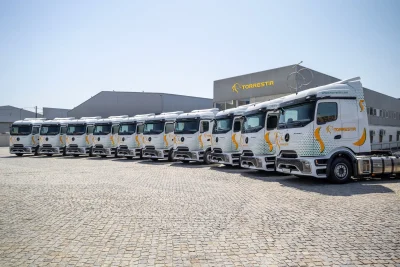
The final question led us to something consumers rarely see. 60% pointed to logistics automation as the change that has most transformed distribution. The remaining 40% chose the urban last mile. Faster deliveries and more resilient supply chains received no votes.
It's a curious way to conclude this journey. We started with the smartphone in the consumer's hand and ended with machines, systems, and algorithms behind the scenes of distribution. Between these two things lies the entire infrastructure that made it possible to buy at any time, find available products, receive orders at home, and demand speed. The consumer has become more digital. The store has become more technological. And logistics had to keep up with both.
Automated warehouses, order picking, forecasting systems, robotization, and route optimization are now part of a reality that often remains invisible until it fails. The simpler the purchase seems to the consumer, the greater the complexity required to make it possible.
The thread that connects all the changes
Looking at the ten responses together, a pattern emerges. Smartphone . E-commerce. Autonomy. Instant comparison. Social networks. Personalization. Data. Well-being. Circularity. Automation. These are different phenomena, but they tell the same story. Consumption has become more distributed, more transparent, more individual, and much more immediate.
Consumers gained information and tools. Brands lost some control of the conversation. Retailers could no longer choose between physical and digital options. The industry began responding to more fragmented needs. And a growing technological layer became indispensable for making the whole system work.
Some of the great revolutions of the last two decades were noisy. Others have become so commonplace that we almost forget they are recent. Paying without cash. Knowing where an order is. Comparing prices in a store. Publicly complaining to a brand. Shopping at three in the morning. Receiving a personalized recommendation. Checking a product's ingredients before adding it to your cart. At one point, all of this was new. Today, it's expected. Perhaps that is, after all, the best way to measure a truly structural change: the moment we stop noticing it.
When asked which change has most transformed the consumer in the last two decades, there was little hesitation. The smartphone in everyday life garnered 67% of the responses. The ability to shop anytime and the existence of a more informed consumer both received 17%. Price comparison in seconds received no votes.
Community choices
Which of these changes has most transformed the consumer in the last two decades?
Smartphones in everyday life: 67%
Buy anytime: 17%
More informed consumers: 17%
Compare prices in seconds: 0%
What change has most transformed the way we shop?
E-commerce: 57%
Purchases made via smartphone: 43%
Faster deliveries: 0%
What change has transformed the physical store the most?
In-store experience: 50%
More autonomous purchasing: 50%
Physical-digital integration: 0%
Greater convenience: 0%
What change has altered the relationship with price the most?
Instant comparison: 100%
Permanent promotions: 0%
Strong private label brands: 0%
Value beyond the price: 0%
What change has transformed brands the most?
Social media: 50%
Purpose and values: 42%
Consumer with a voice: 8%
Content creators: 0%
What change has transformed products the most?
Customization: 33%
Health and functionality: 33%
Sustainability: 33%
More convenience: 0%
What technological change has most transformed retail?
Real-time data: 33%
Digital payments: 33%
Artificial intelligence: 20%
Automation: 13%
What change has brought consumption and well-being closer together?
Clearer labels: 25%
Functional products: 25%
Less sugar and salt: 25%
Daily well-being: 25%
What change has most driven sustainability?
Circular economy: 67%
Less plastic: 11%
Responsible consumption: 11%
Greater traceability: 11%
What change has transformed distribution the most?
Logistics automation: 60%
Last urban mile: 40%
Faster deliveries: 0%
More resilient supply chains: 0%
Results of surveys conducted by Grande Consumo on LinkedIn as part of the preparation for the 100th edition. The results reflect exclusively the participation obtained in each survey and do not constitute a representative sample of the universe of consumers or professionals in the sector.
Advertise with us!