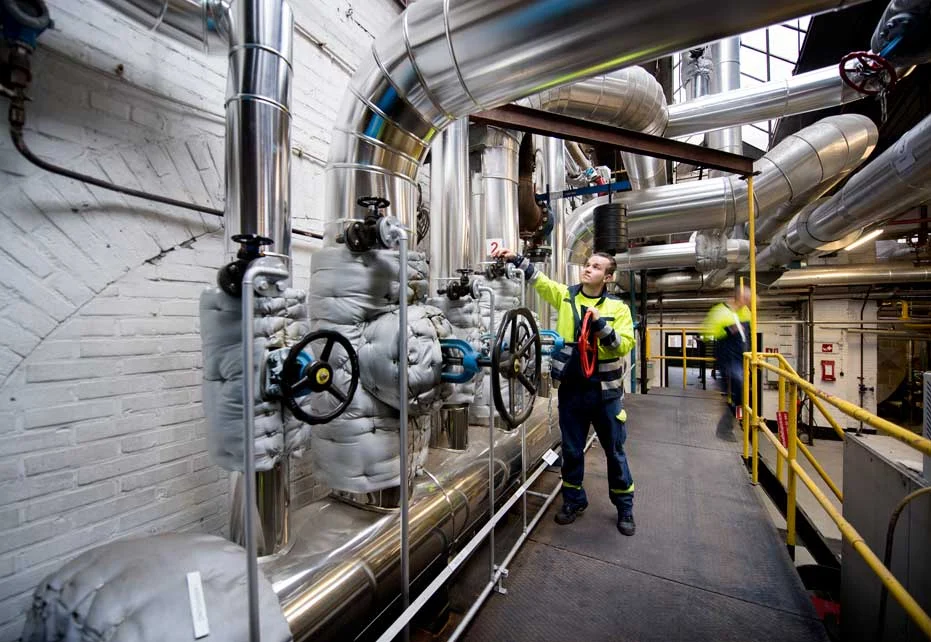
At its paper mill in Roermond, Netherlands, Smurfit Kappa has developed a technology that optimizes steam usage in its recycled paper production machines.
The project, which is part of an ongoing program to reduce energy-intensive and CO2 emissions at the factory and has achieved a 23% reduction in CO2 emissions since 2005, was highlighted as an example of sustainability. During 2018, the CO2 footprint of the Roermond factory's production processes was reduced by more than 3%.
The Smurfit Kappa factory, located in the Netherlands, produces recycled paper for corrugated cardboard packaging, employing three machines that use steam during the process. Until the installation of the new technology, only a portion of the residual steam from two of these machines was reused. This inefficiency was corrected when, as part of the factory's project to reduce its carbon emissions, the steam systems of the three machines were integrated with a sophisticated control system. The task was not easy, as the machines operate at different speeds, using different paper weights.
Once integration was achieved, the project was presented to the European Parliament as part of the Confederation of European Paper Industries (CEPI) plan “To our roots and beyond: RE-INVEST 2050”, which aims to leverage innovation to reduce carbon emissions in the forest fiber and paper industry in Europe.
Wim Janssen, energy and production technologist at the Dutch factory, explains that, after conducting a detailed analysis of the processes, in Roermond they managed to " reuse the excess steam from two of the machines in the third, an improvement thanks to which gas consumption in the factory decreased and CO2 emissions were reduced by 4.500 tons in 2018 ".