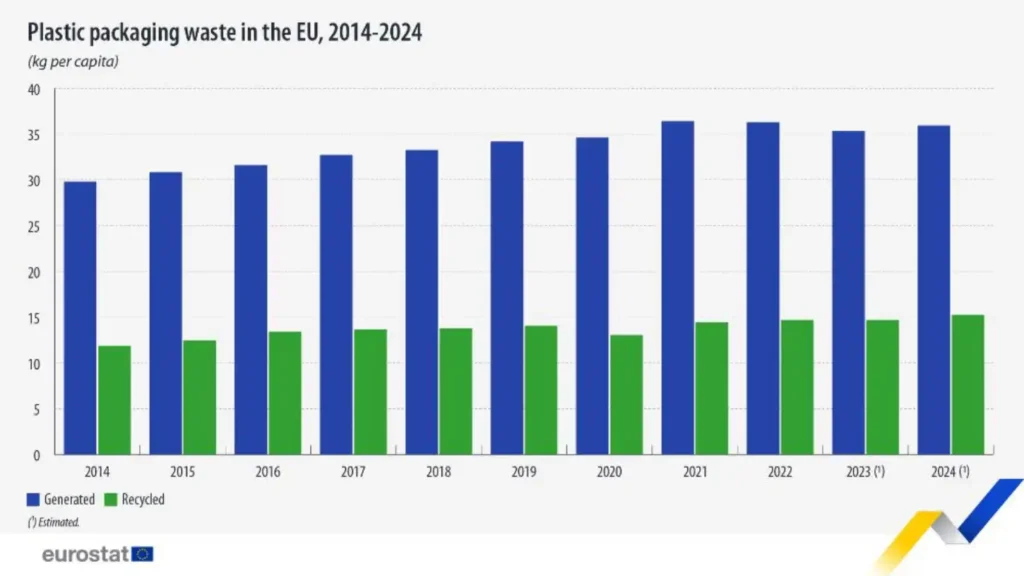
The European Union (EU) recycled 42,4% of the plastic packaging waste generated in 2024, up from 41,6% in the previous year. According to Eurostat data , each inhabitant produced an average of 35,9 kilograms of this waste, of which 15,3 kilograms were sent for recycling.
In total, the EU generated 81,5 million tons of packaging waste in 2024, equivalent to 181 kilograms per inhabitant. This represents an increase of 3,2 kilograms per person compared to 2023 and 19,6 kilograms compared to 2014.
Paper and cardboard were the most representative materials, accounting for 40,8% of the total. They were followed by plastic, with 19,9%, glass, with 18,1%, wood, with 16,2%, and metals, with 4,8%. Other materials represented the remaining 0,2%.
Specifically regarding plastic packaging, both the amount generated and the amount recycled increased by 0,6 kilograms per capita compared to 2023. Between 2014 and 2024, the production of this waste grew by 6,1 kilograms per person, while the amount recycled increased by 3,4 kilograms.
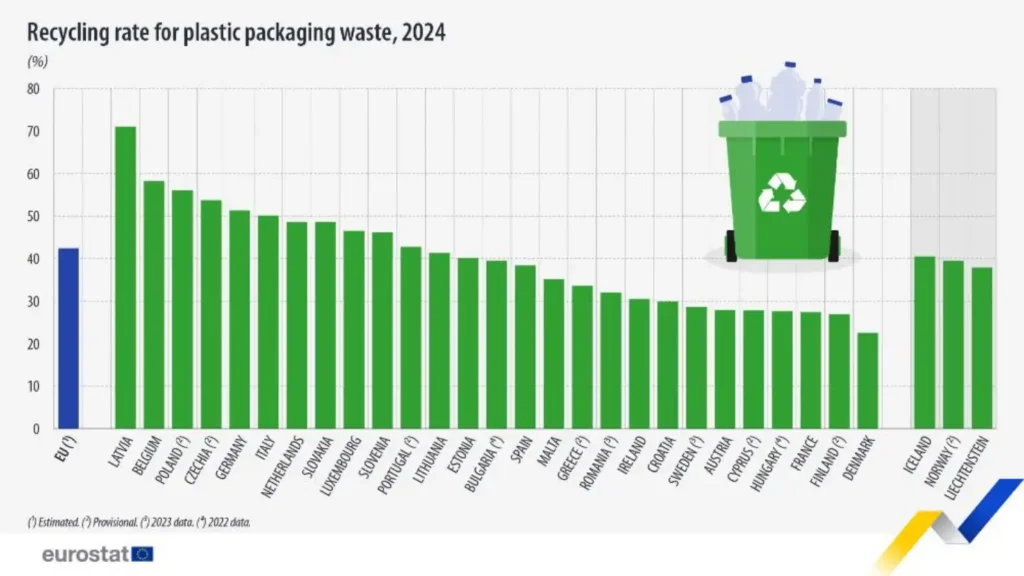
Latvia leads in recycling rate.
Among the member states, Latvia recorded the highest recycling rate for plastic packaging, at 71%. This was followed by Belgium, with 58,2%, Poland, with 56%, and the Czech Republic, with 53,7%.
At the opposite extreme, Denmark had the lowest rate, at 22,5%, followed by Finland, with 26,9%, and France, with 27,4%.
Despite the improvement recorded in 2024, less than half of the plastic packaging waste generated in the EU was recycled, in a context of continued increases in the production of this type of waste.
Advertise with us!