79% of young people believe that soft skills will be more important in future leaders. This is the conclusion of the #CtheFuture2.0 survey, conducted by the Adecco Group Foundation and launched among young people aged 18 to 30, as part of the international CEO for One Month program.
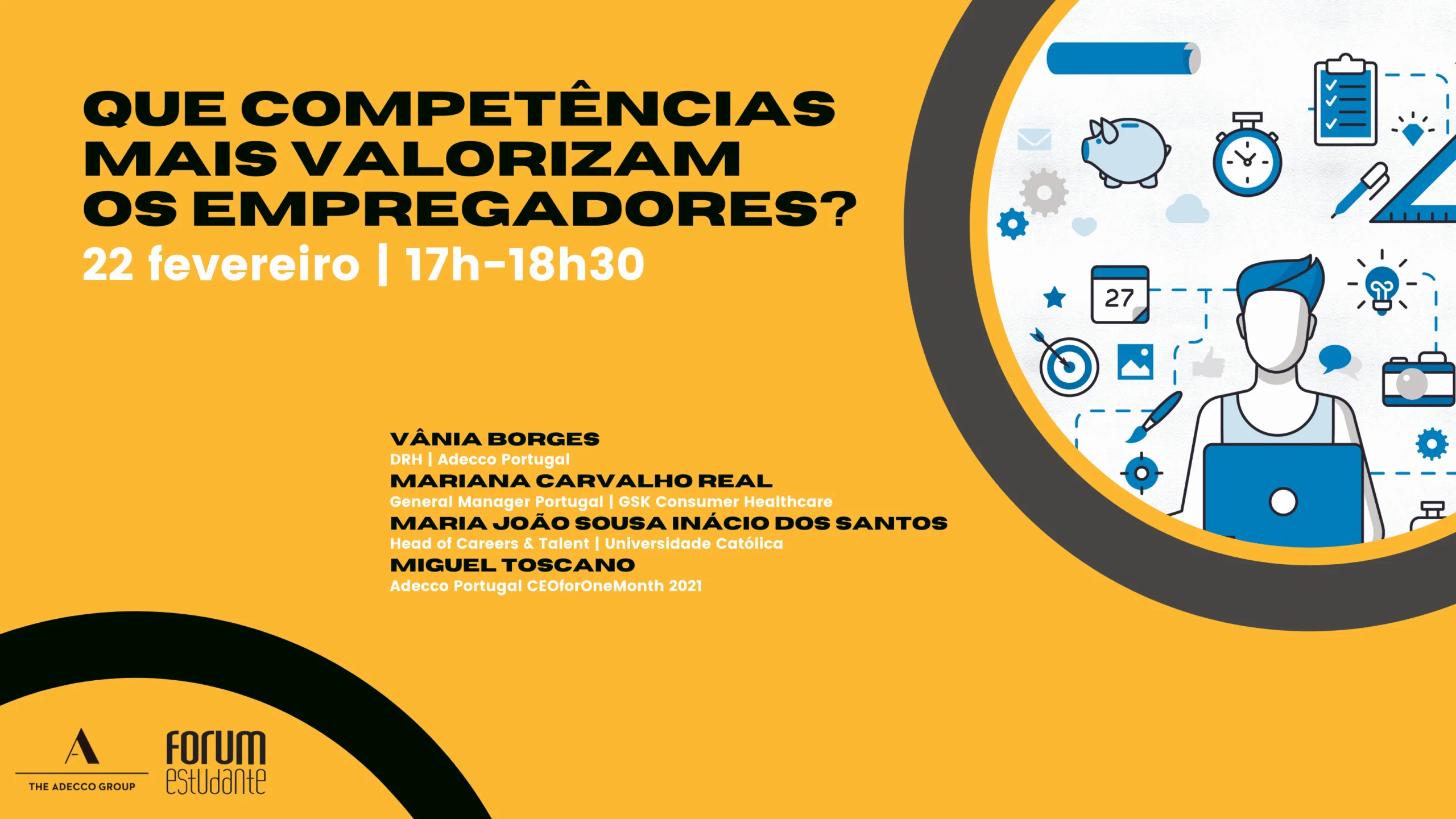
Given that Generation Z, the so-called digital natives, are expected to represent a third of the workforce by 2030, what possibilities do they have, after the impact of the pandemic, in accessing their first job? What kind of experiences can a young person have to improve their skills? How can they highlight certain skills on their CV that they haven't yet acquired in a professional environment? These are the questions that will be discussed in the webinar "What skills do employers value most?", a joint initiative of Adecco Portugal, Forum Estudante and Consórcio Maior Empregabilidade, taking place on February 22nd at 17 pm.
Impact of the pandemic
By 2040, the Adecco Group estimates that Generation Z will occupy influential leadership positions in leading organizations worldwide. However, at such a critical moment in their career journey, they have had to adapt quickly to a new world of work following the onset of Covid-19.
Although studies analyzing the impact of the pandemic on this generation are still ongoing, it is known that their educational experience has been affected. Students adjusted to the need for greater accountability for their learning, which involved attending virtual classrooms and accessing digital content at their own pace. Many students missed the social aspects of face-to-face learning, such as seeing their tutors and collaborating with their peers. Others experienced challenges due to their home work environment and inability to concentrate.
Although this generation might typically be judged as having less resilience than others, it is worth noting that the pandemic dismantled crucial support systems for Generation Z. Social distancing measures and the inability to participate in extracurricular activities and hobbies resulted in a lack of opportunities to network and collaborate with their peers. Perhaps even more importantly, support opportunities were limited during such a challenging and uncertain time in their careers.
This is a relevant fact in an increasingly virtual work world, where Gen Z is even more isolated as they enter the workforce for the first time. “ Securing the first job after graduation was already a challenging process for graduates, who often describe a repetitive and demoralizing cycle of applications and rejections, with little or no feedback from potential employers. The pandemic has further amplified these challenges; according to a study by the Adecco Group, 26% of higher education students were removed from internships and 28% of graduating students saw job offers for recent graduates terminated ,” indicates the human resources consultancy.