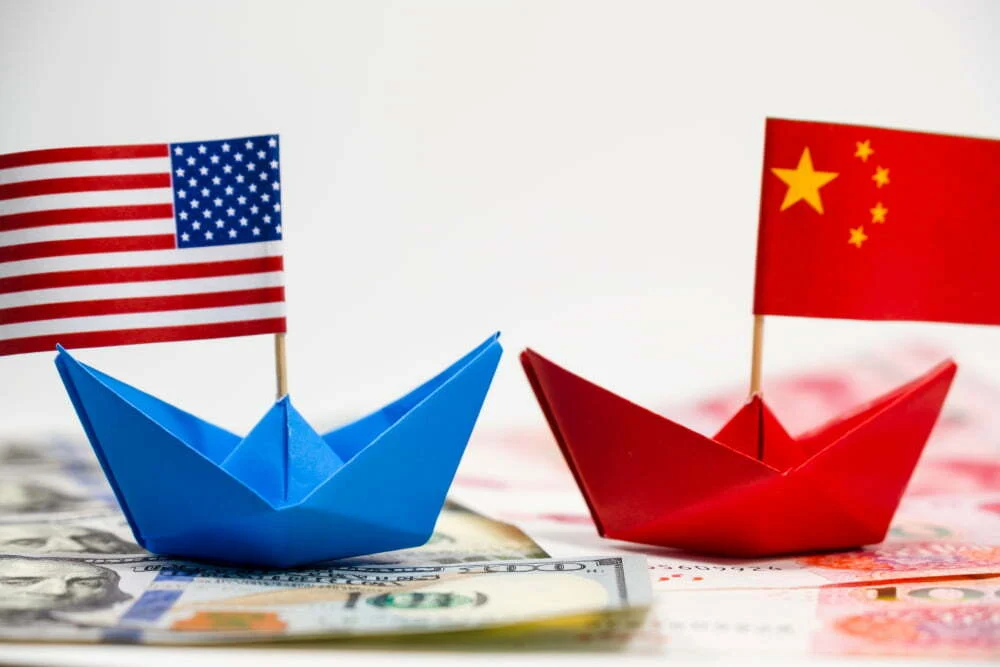
The United States and China, the world's two largest economies, remain locked in a trade war that could destabilize their economies. According to the latest report released by Crédito y Caución, private household and corporate debt is a key means of amplifying the economic costs of an escalation in this trade dispute.
US private debt has stabilized around 148% of GDP, in a context of risk shifting from households to the corporate sector. Corporate debt grew to 73% of GDP in 2018, near its pre-crisis peak. Although it remains one of the lowest ratios among advanced economies, the credit insurer notes increasing concern about the quality of US corporate debt and weakening underwriting rules. Rising interest rates or falling profits are two factors that can generate credit problems among companies.
Given the Federal Reserve's monetary policy, the decline in profits caused by escalating trade tensions is the primary threat to credit risks. Although the economy has been experiencing a long period of expansion, corporate profits fell in the first quarter. Companies operating in the real estate and utilities sectors are the most vulnerable to the rapid deterioration resulting from a drop in profits, followed by companies in the energy, communications, and healthcare sectors. Other highly exposed sectors include food, beverages, tobacco, and construction.
Private debt in China represented 203% of GDP in 2018. Unlike the United States, in China, household debt has almost tripled (from 19% of GDP before the global financial crisis to 51% in 2018), representing the fastest growth rate in the world. The increase relative to disposable income is even faster: 120% compared to 30% in 2007. With 80% of household debt financed at variable rates, Chinese households are vulnerable to economic cycle fluctuations.
The Chinese business sector has begun deleveraging, a process that increases the risk of a forced slowdown in the Chinese economy. Corporate debt, which still represents 152% of GDP, is the second highest among emerging markets, behind Hong Kong (220%). 95% of Chinese corporate debt is denominated in local currency, making it less vulnerable to exchange rate risk, but, as in the United States, Crédito y Caución is registering increasing concern about the deterioration of companies' credit quality. The most vulnerable sectors are those with excess capacity (steel, aluminum, coal, laminated glass and cement), along with the most indebted (construction and real estate) and those involved in the trade dispute with the United States (metals, plastics and machinery).