Uncertainty surrounding the coronavirus continues to grow. Social alarm is already a reality, and authorities are asking citizens not to leave their homes unless strictly necessary. In this context, consumers are going to supermarkets less and less, and according to eMarketer, the solution may lie in e-commerce.
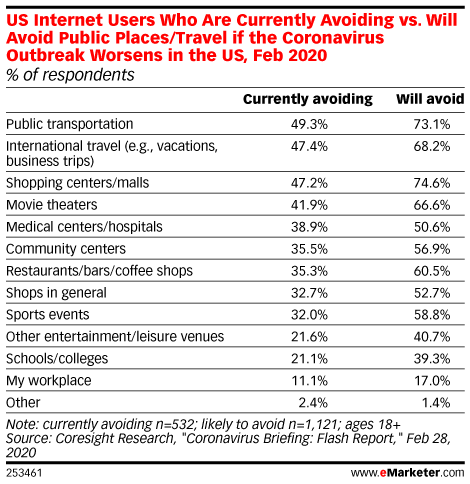
Nearly half (47,2%) of American internet users surveyed by Coresight Research last month said they were already avoiding shopping malls and supermarkets. Furthermore, 74,6% stated that if the outbreak worsened, they would stay away from these places altogether.
The same is happening in physical stores in general. Around 32,7% of those surveyed have already been avoiding physical stores for a month, and more than half indicated that they would avoid them if COVID-19 spreads, as we are currently experiencing.
“ It’s understandable, given the uncertainty surrounding the coronavirus, that vulnerable populations are avoiding physical environments that increase opportunities for exposure ,” says Andrew Lipsman, principal analyst at eMarketer. “ But the needs of their homes don’t disappear and may even increase due to government stay-at-home orders. This is causing many people to seek to stockpile resources ,” he adds.
More and more people are turning to e-commerce to avoid leaving home. But the other side of the coin is that no e-commerce platform can withstand this overloaded situation for long. Amazon customers, for example, have already received notifications such as “ We’re sorry your delivery is delayed. Most delayed orders arrive within a day. If you don’t receive your order by tomorrow, you can request a refund or replacement .” Furthermore, those wishing to purchase household goods and groceries through Amazon Prime Now can also anticipate delays. Jeff Bezos' company stated that the website and app are saturated and that, “ at the moment, delivery availability may be limited .”
Overall, sales of basic products are increasing, which was expected. However, according to Nielsen data, some products stand out curiously: oat milk sales increased by 305,5% in the week ending February 22nd, while water sales increased by only 5,1%, lagging behind dried beans, energy drinks, and biscuits.
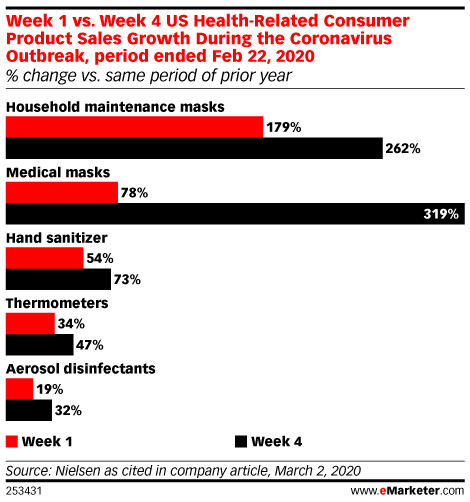
Unsurprisingly, the Nielsen study also notes that health-related items are growing. Sales of face masks, for example, grew 78% in the first week of a four-week period ending February 22, compared to the same period last year. In the fourth week, sales increased by 319%.