In 2019, commercial real estate investment activity remained dynamic, with closing volumes estimated at three billion euros, in line with the record value reached in the previous year.
According to Eric van Leuven, general manager of Cushman & Wakefield in Portugal, “ 2019 was an excellent year across the board for the national real estate market: in the commercial real estate investment market, it is estimated that three billion euros were transacted, while the occupational market reveals active demand limited by the scarcity of quality product supply. Regarding Cushman & Wakefield's activity in Portugal, we also obtained excellent results, with all departments exceeding their objectives. Last year was also marked by the company being awarded the prize for best global real estate consultancy by the prestigious international publication Euromoney .”
As in other European markets, investment volume was limited by the quantity of assets available for transaction, and not by investor appetite. Large portfolio transactions continued to have a very significant weight in total investment, representing 53% of the volume traded, with €1.450 billion distributed across 17 deals.
Regarding urban development and rehabilitation activities, influenced by the scarcity of supply in the occupational markets and the greater attractiveness of the national real estate sector on a global scale, institutional investment continued to be attracted. It is estimated that, in 2019, the volume allocated to this type of operation substantially exceeded one billion euros. Among the largest transactions, the sale by Novo Banco of a residential project in Marvila (Lisbon) to VIC Properties for 140 million euros stands out, as does the recent acquisition of the main assets of Herdade da Comporta by the Vanguard Properties and Amorim Luxury consortium from Gesfimo for 147 million euros.
The office sector led the demand, attracting 36% of the total invested, around 990 million euros. The main transactions corresponded to the purchase of FMP 41 by the German fund Deka and the Art's Business Centre and Torre Fernão Magalhães portfolio by the Spanish SOCIMI Merlin.
The retail sector followed closely, accounting for 35% of the total volume, exceeding 970 million euros. The shopping center segment was the most active, to which the acquisition of AlgarveShopping and Albufeira Retail Park by Frey for 179 million euros contributed, as well as the sale of RioSul Shopping, 8ª Avenida and LoureShopping to Harbert for 170 million euros.
The hotel sector stood out in 2019, capturing 19% of the total capital invested, totaling 520 million euros. The largest transaction of the year was in this sector, corresponding to the sale of the Tivoli portfolio by Minor to Invesco for 313 million euros.
The growing promotion in less traditional segments has also attracted foreign capital, particularly Xior, which acquired eight student residences (in different stages of development) for 160 million euros.
Retail
The retail sector also proved to be active. According to analysis by Cushman & Wakefield, which monitors the vast majority of shopping centers and stand-alone units in Portugal, as well as street retail in the urban centers of Lisbon and Porto, 810 stores were leased in 2019, totaling an area of 256 square meters. Street retail stood out by a wide margin, representing 64% of the number of transactions, followed by shopping centers with 24%.
Influenced by the growing tourism industry, the restaurant sector was once again the most active, accounting for 56% of new leases, followed by fashion with 12%.
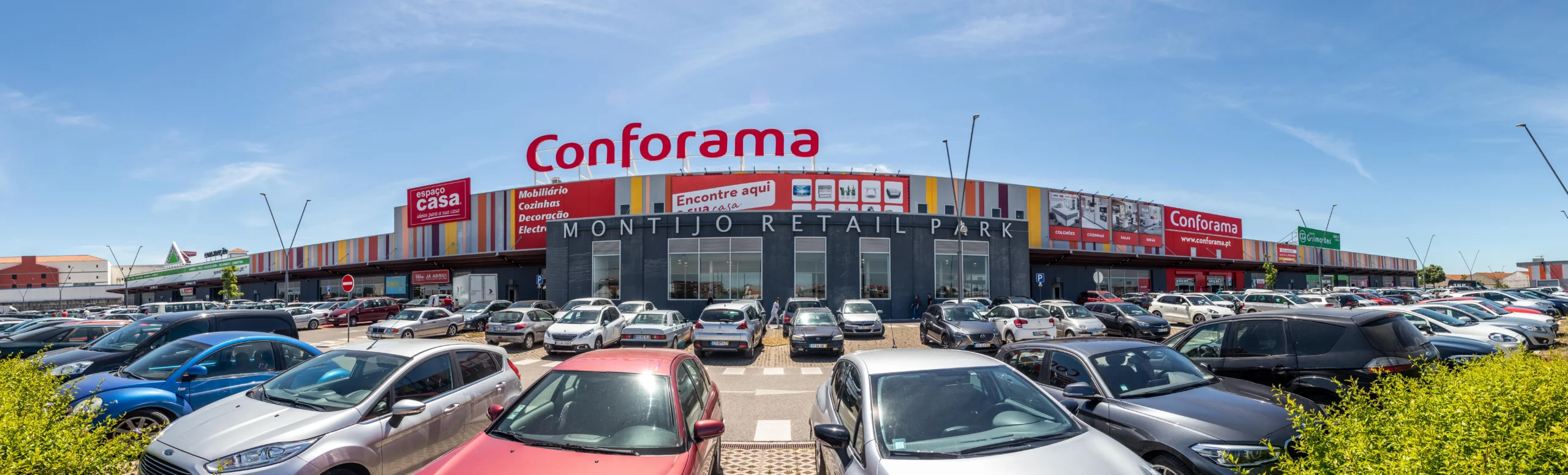
The Cushman & Wakefield retail team was responsible for 60 transactions, corresponding to approximately 22 square meters, across various areas of operation. Among others, highlights include the marketing and subsequent sale of Montijo Retail Park, the only project to open in the country in 2019, as well as the leases of Happy Socks on Rua Garrett, DeBorla in Alfragide, and Sports Direct in Vila Nova de Gaia.
Industrial and land
The industrial market experienced some contraction throughout 2019, most likely due to a shortage of modern, high-quality facilities: between January and September, only 96.600 square meters were transacted, 10% below the volume recorded in the same period of the previous year. Among the main deals, the completion of Mercadona's Póvoa de Varzim Logistics Block, with 24 square meters, and the expansion by the technology company Vision Box, of 7.100 square meters, in Cascais, stand out.
In 2019, Cushman & Wakefield was co-exclusively responsible for the lease of a 5,000 square meter warehouse in Águeda to Uber, as well as a lease of a 1.300 square meter warehouse in Loulé to DHL Express. Additionally, it assisted in the sale of a 59,000 square meter plot of land in Castanheira do Ribatejo by Bacardi to Dachser, and a 4.380 square meter warehouse by Cosec to Mseven.
“ For this year, the outlook remains optimistic, despite some international instability and lower growth potential in the global economy. However, the expected maintenance of low interest rates and Portugal's 'popularity' as an investment destination will lead to high levels of liquidity being invested in various segments of the real estate market ,” predicts Eric van Leuven.
Investment activity will remain dynamic, despite being characterized by some scarcity of available product. With over two billion euros of transactions currently in various stages of negotiation, estimates suggest that 2020 will see a volume close to that of the last two years. Similarly, a decrease in the high levels of latent demand in the occupancy market is not anticipated; this demand will continue to pressure the market to increase the supply of quality spaces that meet tenant occupancy criteria.
Throughout 2020, the concept of the sharing economy (or co-evolution) will continue to energize the market, with the emergence of new products and concepts. Among others, these include flexible offices (including coworking), coliving, microliving, and a new type of student and senior residences. While not new products on the market, they stand out for their focus on adapting to the evolving requirements of end users and for their professional management, which will likely attract the interest of institutional investors. “ Finally, I hope that the newly appointed Government will treat the real estate sector with the care it deserves, an industry that was largely responsible for economic and employment recovery, and not just as an inexhaustible source of taxes. While in 2019 the Government had some commendable initiatives, namely the possibility of creating SIGI (Real Estate Investment and Management Companies) and the Affordable Housing Program, the negative aspect is the (yet another) amendment to the Tenancy Law, again burdening landlords and creating an impractical system of preferential rights that killed the possibility of an institutional housing rental market, so necessary and so common in other countries ,” concludes Eric van Leuven.