The way Covid-19 shaped the preferences of Portuguese consumers in terms of retail brands is analyzed by dunnhumby. A study that addresses the main criteria behind these choices, in terms of stores, confirms Continente's leadership, which stands out in most indicators. But attention is paid to the increasingly important issue of the emotional connection with customers, an aspect where Lidl excels.
In July 2020, following the resonance obtained by the study in markets such as the North American one, dunnhumby launched its first edition of the “Portugal's Retailer Preference Index” (RPI), addressing the pre-Covid consumer. Using data from more than 600 national shoppers, the study revealed a direct link between consumer sentiment and business performance, providing a detailed view of the aspects that lead consumers to choose one particular brand over another.
This first edition revealed eight pillars of preference: product quality, promotions and assortment, in first place, followed by the store experience and price perception, and only then proximity, convenient location and price stability. At the time, the performance of four major operators in the Portuguese market was evaluated – Continente, Auchan, Minipreço and Pingo Doce – highlighting those that excelled in each of those pillars, as well as the winners of two additional categories: the emotional connection between a retailer and its customers and overall performance. Auchan and Continente, respectively, secured the top positions.
Second vacancy
Four months later, and in a context already more penalized by Covid-19, dunnhumby revisited the Portuguese market to verify how the pandemic altered the existing order. In this second wave of the study, Lidl, Intermarché, Mercadona, and E.Leclerc were also evaluated, and 1.500 consumers were surveyed. And while the pandemic undoubtedly altered many purchasing behaviors, the truth is that, even so, Continente once again registered the best overall ranking, which, according to dunnhumby, can be explained by its significant advantage in terms of sales area, allowing it to offer a "one-stop-shop" experience. Pingo Doce and Lidl followed closely.
One interesting fact, however, is that when it comes to emotional connection with customers, it's not the market leaders, Continente and Pingo Doce, that stand out, but rather Lidl and Mercadona. These are the two brands that customers would most recommend to friends and family, whose store closures they would most regret, and in which they have the most trust.
With the entry of new operators, the level of competition has increased, and markedly Every Day Low Prices (ELDP) offers have also begun to come into play. Nevertheless, two brands have historically dominated the market, Continente and Pingo Doce, and the top 5, also composed of Intermarché, Auchan, and Lidl, holds almost two-thirds of the market share.
Portuguese market
But before delving into the results of this second wave of the study, dunnhumby advises understanding the national retail market as a whole. Before Covid-19, Portugal was emerging as one of the most promising food retail markets on the European continent. Projections indicated a cumulative growth rate of 2,2% between 2019 and 2022, and operators were betting on expanding their presence: in 2018 and 2019, around 300 new stores opened.
With the entry of new operators, the level of competition has increased, and markedly Every Day Low Prices (ELDP) offers have also begun to come into play. Nevertheless, two brands have historically dominated the market, Continente and Pingo Doce, and the top 5, which also includes Intermarché, Auchan and Lidl, holds almost two-thirds of the market share.
Portuguese retail chains have tended to adopt relatively traditional tactics to encourage purchases. As dunnhumby notes, promotions are commonplace, driving 46% of sales, and loyalty programs are widely used.
E-commerce, in turn, has grown steadily in recent years. The number of consumers who bought food online increased from 2% in 2009 to 11% in 2018, but the adoption of this channel remained relatively low compared to markets such as the Netherlands, the United Kingdom, and Germany.
And then came Covid-19. Portugal reacted relatively early, closing schools on March 16, 2020, and declaring a state of emergency two days later, leading to a widespread lockdown of the country. This proactive approach, when fewer than 500 cases of Covid-19 had been reported, was crucial in containing the spread of the virus at the time and one of the main reasons why the country maintained one of the lowest infection rates in Western Europe until October.
Impact on purchasing behavior
Nevertheless, the pandemic had a pronounced impact on purchasing behavior and, consequently, on the retail sector. During the stockpiling period, right at the beginning of the pandemic, sales of essential goods skyrocketed and, in an attempt to ensure that customers had access to them, some retailers introduced special measures, such as price freezes, the creation of gift baskets, and even the suspension of promotions.
Forced to stay home, many consumers discovered online services for the first time, and online sales of food and consumer goods grew by 60% compared to pre-Covid levels. Simultaneously, local shops were favored, with two-thirds indicating they planned to buy more from local businesses to aid their recovery. “ The convenience offered and shorter queues, both factors associated with social distancing, were seen as the main benefits offered by local shops ,” highlights dunnhumby.
The picture is not complete without considering the financial aspect. With the pandemic particularly affecting the vital tourism sector, the Portuguese economy shrank by a record 13,9% between April and June. Consumer confidence followed this decline, falling 31 percentage points in the second quarter of 2020 compared to the same period in 2019. Consequently, many consumers began to limit their spending.
With this background, hypermarkets continued to be the most popular retail format, accounting for 85% of store visits during the month of September, according to dunnhumby. In terms of price perception, this remained relatively stable across all brands analyzed, with Intermarché being indicated by shoppers as the most expensive and Lidl as the cheapest.
Loyalty
With this background, hypermarkets continued to be the most popular retail format, accounting for 85% of store visits during the month of September, according to dunnhumby. In terms of price perception, this remained relatively stable across all brands analyzed, with Intermarché being indicated by shoppers as the most expensive and Lidl as the cheapest.
In all other pillars of preference, the dunnhumby study finds data that could represent a problem for retailers, since the full impact of Covid-19 is yet to be assessed. And the main issue lies in loyalty, or rather, the lack thereof. “Despite Continente, Pingo Doce, and Lidl dominating in market share, the highly fluid customer base in Portugal is made up of shoppers who are perfectly comfortable buying from various brands, depending on their needs at the moment ,” notes the consultancy.
Indeed, during the four-week period covered by the study, most consumers visited at least four stores, with their spending in each one being relatively low. Only Continente and Pingo Doce had a "share of wallet" above 25%.
Even more alarming, according to dunnhumby, is that this data was collected before the pandemic worsened. As such, they anticipate that loyalty will continue to decline in the coming months, with consumers prioritizing convenience and value over familiarity.
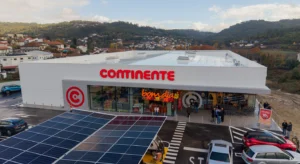
Repeating its success from the first wave, Continente once again occupies the top position in the Retailer Preference Index. It leads in terms of spending share, demonstrates a strong emotional connection with consumers, and has a consistent record across each of the preference pillars, excelling in one-stop-shop options and promotions, and being acclaimed for its in-store experience, quality, and prices. Lidl leads in terms of emotional connection with customers.
Retailers
The main changes, in terms of the pillars of preference, between the first and second waves of the study revolve around the pillar of quality, which was the highest in the initial study and has now been relegated to fifth place. The fact that it is a "one-stop-shop," along with promotions (this time analyzed together) and the in-store experience, surpassed quality in terms of preference. Other significant changes include the emergence of private label quality as an influencing factor.
Repeating its success from the first wave, Continente once again occupies the top position in the Retailer Preference Index. It leads in terms of spending share, demonstrates a strong emotional connection with consumers, and has a consistent record across each of the preference pillars, excelling in "one-stop-shop" offerings and promotions, and being acclaimed for its in-store experience, quality, and prices. Lidl, however, leads in terms of emotional connection with customers.
In the "one-stop-shop" pillar, the third most important in this edition of the study, Continente leads. The evolution of this pillar may have been influenced by stock shortages during the first weeks of the pandemic, which may have motivated consumers to now consider assortment as the most influential factor in choosing a retailer. The notion of "one-stop-shop" extends beyond the perspective of variety, including the breadth of the range in terms of natural, organic and specialized products, the possibility of doing all shopping at once and the ease of finding the products needed. Being the global leader, it is natural that Continente also leads the category that consumers now consider most important.
Lidl leads in price.
In terms of price, Lidl leads. This pillar, which ranked fifth in the previous wave of the study, has now become one of the most important in terms of consumer decision-making. And, in addition to offering low prices, this criterion also relies on fair prices for natural and organic products, as well as private label brands. This is where the element of perception comes into play.
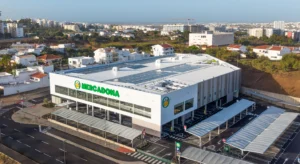
Regarding the in-store experience, Mercadona stands out. This pillar is based on aspects such as ease of checkout, staff friendliness and their ability to help customers, as well as the appearance and cleanliness of the stores. This pillar has also increased in importance compared to the first wave of the study, which is certainly related to the pandemic and the need for consumers to have an easy and quick shopping experience in a comfortable environment.
Promotions are with Continente
Continente once again leads in the promotions pillar, the second pillar based on price perception. Despite the recognized "promotion-dependence" of Portuguese consumers, in this edition of the study, promotions fell to fourth place among the preference pillars. Economic volatility has highlighted the importance of price stability, with promotional activity disappearing from many stores at the beginning of the pandemic.
In turn, Mercadona stands out again in the fifth pillar of preference: quality. This criterion is based both on the availability of high-quality products and on fresh produce, and in the previous edition of the study, it topped the preference pillars. Its decline in importance may be due to stock shortages recorded at the beginning of the pandemic and economic concerns, which led consumers to focus on buying what they need, rather than the best possible version of those products.
But in terms of the quality of private label brands, Lidl's stand out. This is a new pillar that benefits from the crisis period, since private label brands tend to grow during these times, which is confirmed by research from dunnhumby, where two out of five consumers worldwide say they plan to save money by switching to private label brands.
“Despite the status quo of the Portuguese retail market remaining relatively intact since Lidl entered the market in 1990, Mercadona's rapid success shows how quickly a new offering can resonate with consumers. ”
future
According to the consultancy, disruption can be a rapid and pronounced process. “ Two years ago, Mercadona was mainly known in Portugal as a retail option during holidays when traveling to Spain. Today, a quarter of shoppers have already visited its stores in the last four weeks, and the brand has already found a place in their hearts. Despite the status quo of Portuguese retail remaining relatively intact since Lidl entered this market in 1990, Mercadona's rapid success shows how quickly a new offering can resonate with consumers ,” argues dunnhumby.
The temptation during a crisis like the one triggered by Covid-19 in 2020 is to believe that long-term victory means simply weathering the storm and emerging stronger. But the nature of the changes brought about by the pandemic implies that, in addition to being stronger, retailers will also emerge from the storm different.
This article was published in Supplement No. 1 of the magazine Grande Consumo.