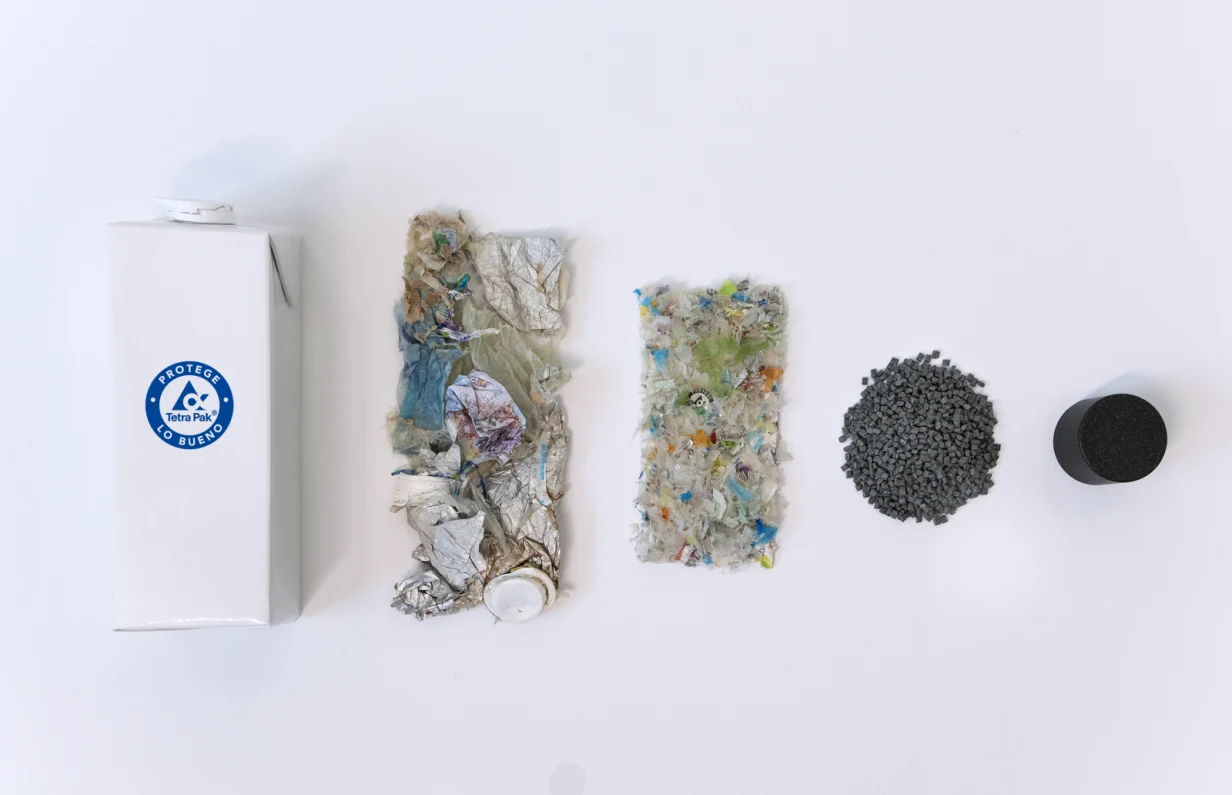
Tetra Pak has announced several strategic investments aimed at increasing the recycling capacity of beverage cartons in the European Union. This move supports the objectives of the proposed Packaging and Packaging Waste Regulation (PPWR), ensuring that all packaging components are recycled and that valuable raw materials are kept in circulation for longer, highlighting the key role of recycling in the ecological transition of the food packaging industry.
In 2023, Tetra Pak invested approximately €40 million to accelerate the recycling of beverage carton packaging worldwide and plans to further increase this amount in the coming years to achieve greater circularity of materials. Recent initiatives and investments aim to promote the European Union's capacity to recycle beverage carton packaging, including the protective polyethylene and aluminum layers, known as "polyal".
This objective will be achieved through new partnerships or by strengthening the capacities of established recyclers, to convert all beverage carton packaging materials into new, high-quality resources and materials. This is complemented by the existing recycling infrastructure in the European Union, where beverage carton packaging is recycled in 20 dedicated paper mills and polyal is currently processed in seven facilities (with a further six under development).
Key investments in 2023
In Sweden, Tetra Pak and the Axjo Group have begun a feasibility study for the construction of a new polyal recycling line that will receive volumes from Sweden, Denmark, and Norway. Driven by a joint investment of up to €24 million and with an annual recycling capacity of 10 tons, this state-of-the-art facility will recycle and incorporate polyal into injection-molded plastic products manufactured by Axjo, including cable drums, reels, spools, and plastic storage boxes.
In Spain, Tetra Pak and Trans Sabater invested over two million euros and expanded their agreement to increase the installed capacity for recycling polyal from three thousand tons to ten thousand tons per year. This secondary raw material has unique thermal properties to increase productivity in plastic transformation processes. Furthermore, Trans Sabater's patented mechanical recycling technology improves the quality of polyal pellets compared to traditional processes. The potential end markets for recycled polyal are diverse, including logistics, packaging, retail, and gardening.
Also in Spain, Tetra Pak and Alier have established a partnership that will consolidate Alier as one of the largest recyclers of beverage carton packaging in Europe and help it become an integrated recycler, capable of processing all materials from used beverage carton packaging. Through mechanical recycling, polyal will be transformed into high-quality pellets suitable for various end markets. The goal is to recycle more than 15 tons of polyal per year by 2025.
In the Netherlands, Tetra Pak invested one million euros in Recon Polymers' polyal recycling plant, aiming to increase capacity to at least eight thousand tons per year. This investment will not only improve process efficiency but also promote the circularity of the material in France, Belgium, and the Netherlands. The material's versatility allows it to be transformed into a range of everyday items, such as reusable pallets, interiors, and large-format 3D printed objects.
“ For us, this goes beyond investment in the industry. It’s part of the transformation towards a circular economy and an investment in the future of the planet. These innovative collaborations, which bring together human ingenuity, technology and finance, demonstrate the value of beverage carton packaging within sustainable food systems ,” says Markus Pfanner, Vice President of Sustainability Operations at Tetra Pak. “ Beverage carton packaging is recyclable. It is recycled where the necessary infrastructure exists, so naturally, its expansion is a priority for us. Projects like this ensure that consumers can continue to access food safely and that, after they do, the beverage carton packaging can be recycled, maintaining quality resources and reducing the use of primary resources ,” he concludes.
Follow us on: