Founded in 2010, AdegaMãe has been establishing itself in the Lisbon restaurant scene and beyond. With a very distinctive wine profile, the winery, named in homage to Manuela Alves, the matriarch of the family, is the realization of a long-held dream of the Riberalves Group. The brand has been winning over consumers both domestically and internationally, seduced by the recognized quality of its wines, which have been given the signature "Wines of the Atlantic".
"All Quiet on the Western Front" is a well-known novel by Erich Maria Remarque, adapted into a film in the 30s. This timeless bestseller about the First World War is also an expression that remains an integral part of everyday vocabulary, sometimes without us quite knowing why. This serves as a counterpoint to discuss AdegaMãe, which, in turn, has been bringing much that is new to the West and to Lisbon wines.
 A long-held dream of the Alves family, leaders of one of the most emblematic national cod brands, AdegaMãe, a physical tribute to the matriarch Manuela Alves, is a project of terroir and identity that, throughout its eight years of activity, has been helping to put Lisbon wines on the radar of national and international consumers, making pertinent use of the group's recognized distribution capacity.
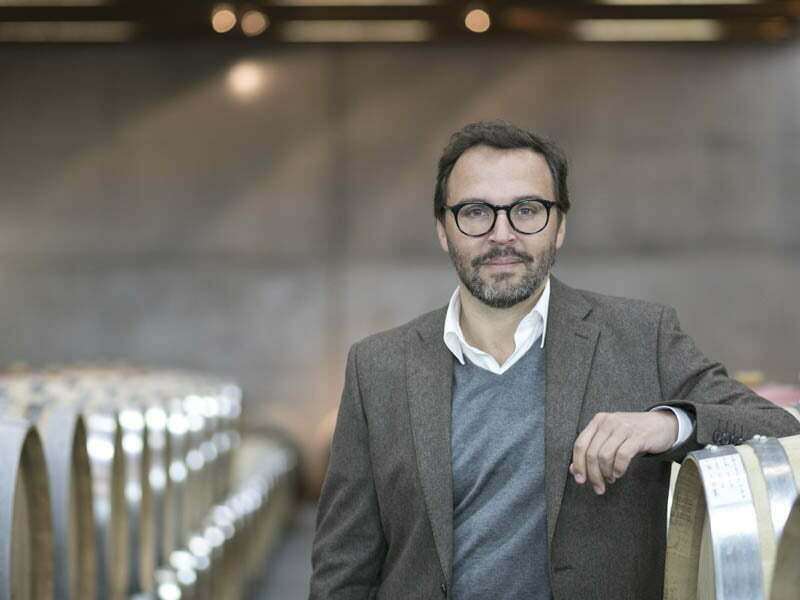
Wines from Lisbon, according to Nielsen, represent approximately €11,8 million in sales nationwide through INA, which speaks volumes about the potential still held for the commercialization of the various wines produced here. The region benefits from the dynamic tourism industry in Portugal and the Lisbon region in particular. “ AdegaMãe was created in 2010 and, since then, the work has focused on consolidating the brand and portfolio, building a strong market reputation, consistency, and variety. All of this had to be created from scratch. When the winery was built, it was a beautiful building. Today it's a brand. The know-how that the group itself has in the food sector and brand building also helped this project reach this point. But we are not complacent ,” introduces Bernardo Alves, administrator of AdegaMãe, who looks to the future while analyzing the past and present of the region in which he decided to invest in a wine project. “ We knew the region had potential. It wasn't AdegaMãe that discovered it. This potential has been recognized for many years, with the wines of Colares, Bucelas, etc. Quality has always been present in this region. What may have been lacking was some scale and financial capacity to create projects. Even today, there are still some operators of a certain size. We need projects that not only produce large volumes, but large volumes with quality and added value to the product. Cooperative wineries play a very important role in terms of volume, but it is also necessary to compensate for this with quality ,” he explains.
A shared effort by the main producers in the Lisbon region, whose commitment to quality is beginning to bear fruit, benefiting, on the one hand, from greater attention from international consumers, but also from the operators in the domestic market themselves, whose greater availability has helped with its marketing and visibility.
In the specific case of AdegaMãe, the focus has been on promoting its brand within the restaurant sector, a slower but more solid path, according to Bernardo Alves, which allowed, for example, the placement of 200 bottles in Lisbon restaurants in 2017 (+30%). “ The Horeca channel is, on the one hand, the most difficult path and, on the other, the most solid and consistent for the brand. We know that large supermarkets are important in the paradigm of creating volumes and sales, but building loyalty in this channel is not easy. Hence, we believed that the Horeca channel was a priority for the brand's creation. At the group level, we have always worked with this channel, so we feel 'at home'. We don't focus so much on the difficulties, but rather on the achievements, which are much more pleasurable and give us more encouragement to face the future ,” he emphasizes.
It should be noted that AdegaMãe has a turnover of €2,5 million (+30%), with exports representing 65% of sales. The future objective, once the one million bottles produced is reached, is one and a half million, " but no more than that ". In Bernardo Alves' opinion, depending on the external market is not the right strategy for this winery and " would not justify all the investment we are making in the Lisbon and Algarve regions, which are priorities for AdegaMãe in the national market ".
That's because 75% of AdegaMãe's sales are to clients different from Riberalves, with its manager acknowledging that " more important than following the group's lead was its knowledge of the market, brand building, and working with a product, be it wine, cod, or any other product ." Each product has its own specificities, hence only 25% of sales are made through common channels. " It's true that it helps open doors, but we have to be very professional and the way we work has to be very independent of each other. Only then can it work ," he affirms.
Terroir as a banner
AdegaMãe's top-of-the-range wine, Terroir, emerged in the fifth year of production, at a time when the desired wine profile for this project was better understood, allowing for a more confident approach to the market. Today, it stands as a flagship of this winery, whose signature is "Wines of the Atlantic".
Produced only in exceptional years, both red and white, Terroir presents itself as the ultimate expression of AdegaMãe's productive capacity, having sold out its first harvest of the AdegaMãe Terroir white 2013 in just three months after its launch. “ This is proof of its success. Lisbon is increasingly recognized as a region of excellent white wines. It makes fantastic red wines, but the excellence lies in the whites. We believe that it is wines like Terroir, iconic wines, that elevate regions. There was no presumption in its launch. There was, however, a very strong desire to do it well. A region that does not launch distinctive wines for the market will never be recognized as a region of excellence. Terroir is yet another wine in the Lisbon region that proves its quality ,” he argues.
A focus on innovation has allowed, over seven years, the launch of several new products on the market, with the current range comprising more than 20 wine references. Among the new releases, noteworthy are the 2014 vintage of Terroir Branco, the single-varietal white Arinto 2016, as well as the first references from the best ever harvest of this house's red wines, with the flagship Touriga Nacional and Pinot Noir 2015. “ But more new products are on the way. We are preparing a Late Harvest, we already have a sparkling wine, and in the future, we will launch another more select sparkling wine. There are things that make sense to add. We are very close to the Lourinhã region, which has one of the three demarcated regions in the world for brandy. Perhaps it involves investing in the neighboring municipality of Torres Vedras, which also belongs to the Lisbon region, and betting on brandy. There are projects on the table that will take shape in the future ,” hints Bernardo Alves.
Wines of the world 
Promoting national grape varieties, but also showcasing those from other regions, AdegaMãe believes that the unique identity of this project lies in the balance between origin and market needs. They market four wines from international grape varieties and two from national varieties for reds, while for whites the balance is three national and three international.We believe in both. We want to find a balance between consumer needs and what we can offer. Above all, we have to believe in what we do and we won't launch something just for the sake of it. There has to be quality, whether it's national or international. It has to be a grape variety that adapts to our terroir, our climate, our Lisbon region. Only then will the best be chosen for single-varietal wines, regardless of whether they are national or international. Ultimately, the consumer is our greatest judge.", Explain.
This is why AdegaMãe recently invested 600 euros in acquiring equipment to further strengthen its production capacity, namely a press, as well as expanding the capacity of the vats and a new warehouse for finished product. In 2018, the investment will be repeated, this time aiming for a new bottling line, in addition to improving the conditions for wine tourism.
While continuing to work diligently in the Horeca channel, AdegaMãe's future plans include strengthening its position in organized retail in Portugal, a channel that currently represents only 2% of its sales. “ Our objective is to reinforce this position, obviously defending the brands we have, without trivializing the brands that are currently present in the Horeca channel. The future will be marked by a natural and gradual emergence in national retail. Possibly, this will involve an exclusive brand for retail ,” explains Bernardo Alves.
 Steps taken calmly, but without losing sight of the surrounding reality. Always aiming to do what is best for the company at every moment, without biting off more than one can chew, as the saying goes. And if seven years ago, when it was created, AdegaMãe's need was to create volumes and sales, in parallel with brand and product range building, currently, that objective has been validated. Identity, product range diversity, competitive price, and quality are some of the qualities that can be attributed to this producer who wants to go even further.We have a considerable range, which we consider to be quite consistent, and we have also secured sales volume, in both quantity and value. In 2017, we reached €2,5 million in revenue, which already allows us to have some financial stability and meet our objectives. From now on, we want to consolidate the work of these seven years, consolidate the range, which needs to establish itself more in the market. And also add value to each bottle of wine, therefore, raise the average price of AdegaMãe, with a view to profitability, and reinforce investment in the brand, both industrially and promotionally. That will be the path for the next seven years.“, He concludes.
This article was published in issue no. 49 of Grande ConsumoWatch the interview video here: