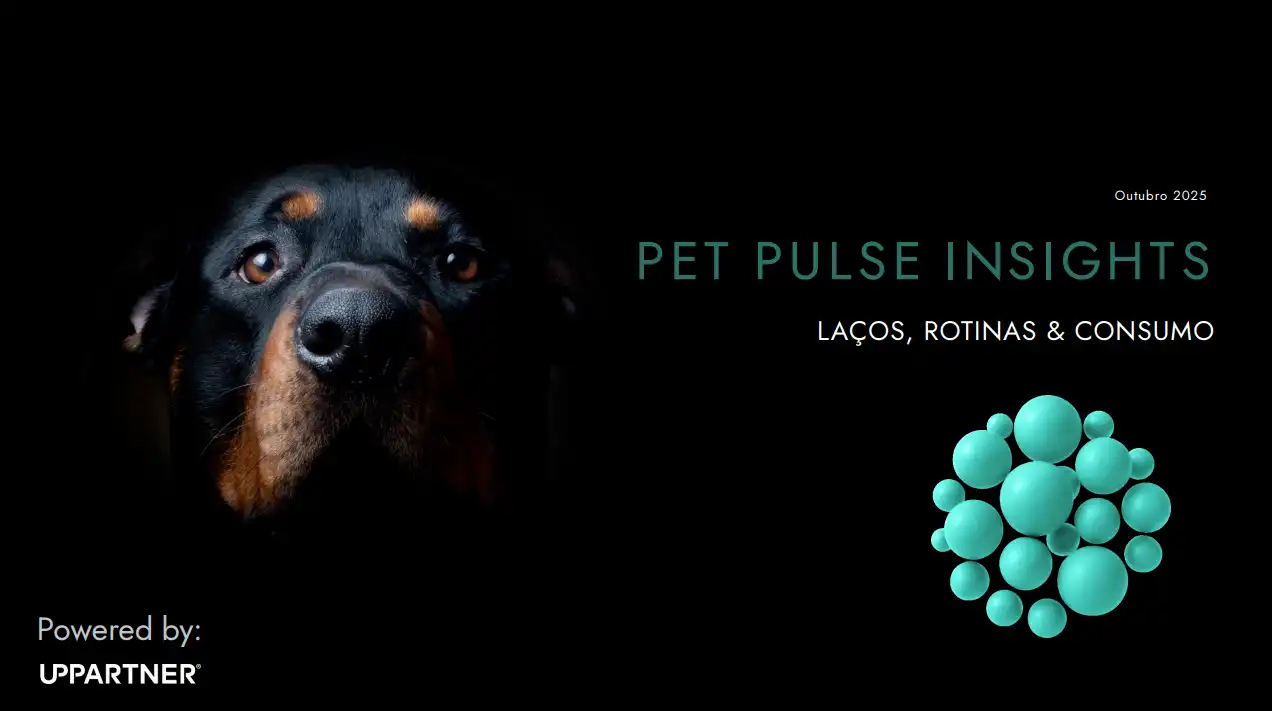
Pets have ceased to occupy a secondary role in the lives of the Portuguese. This is the conclusion of the PetPulse Insights – Bonds, Routines & Consumption study , conducted by UPPartner , which reveals a structural change in the way dogs and cats integrate into the daily lives of families. For 95% of pet owners, the animal is part of the family, an emotional bond that is redefining consumption habits, health routines, and even the very notion of well-being.
A new centrality in family life
Based on a sample of 483 pet owners supplemented by qualitative analysis, the study demonstrates that animals have become " co-authors " of the physical, emotional, and social well-being of the Portuguese population. Families organize routines, choices, and investments based on this bond.
“ Caring for an animal is increasingly becoming an extension of caring for ourselves. This study shows that animal, human, and environmental well-being are deeply interconnected ,” says Bernardo Soares, veterinarian and One Health Director at UPPartner. The One Health approach – which integrates human, animal, and environmental health – is thus gaining new prominence.
Humanizing pets and premium consumption
The humanization of companion animals is among the most striking trends. 97% of pet owners use high-quality dry food, and many supplement it with wet food or functional snacks, replicating in the daily routine of animal nutrition the logic applied to human nutrition: healthy, natural, and preventative.
The study indicates that pet care increasingly reflects the conscious choices of the pet owner, from purchasing premium products to investing in physical and emotional well-being.
This change in behavior is having a direct impact on market dynamics. Although only 15% of pet owners currently have pet health insurance, more than 40% show an intention to get it, especially in cities and among younger generations – a sign that access to more comprehensive veterinary care may gain new traction.
Technology is also entering the pet world:
- 23% use wearables for geolocation or monitoring;
- 40% show curiosity about digital solutions for animal health.
The advancement of these tools points towards an increasingly technological care ecosystem, driven by data and preventive health management.
For Bernardo Soares, this evolution represents a profound shift: “ pets have ceased to be an accessory element and have become an active agent of emotional, social and even economic balance. This challenges brands, professionals and public policies to think about well-being in an integrated way .”
In light of this transformation, UPPartner argues that the One Health vision should guide the development of products, services, and communication strategies in the sector. Tutors expect greater scientific rigor, closer relationships, and transparency – values that, according to the study, will be crucial for future loyalty.
Follow us on: