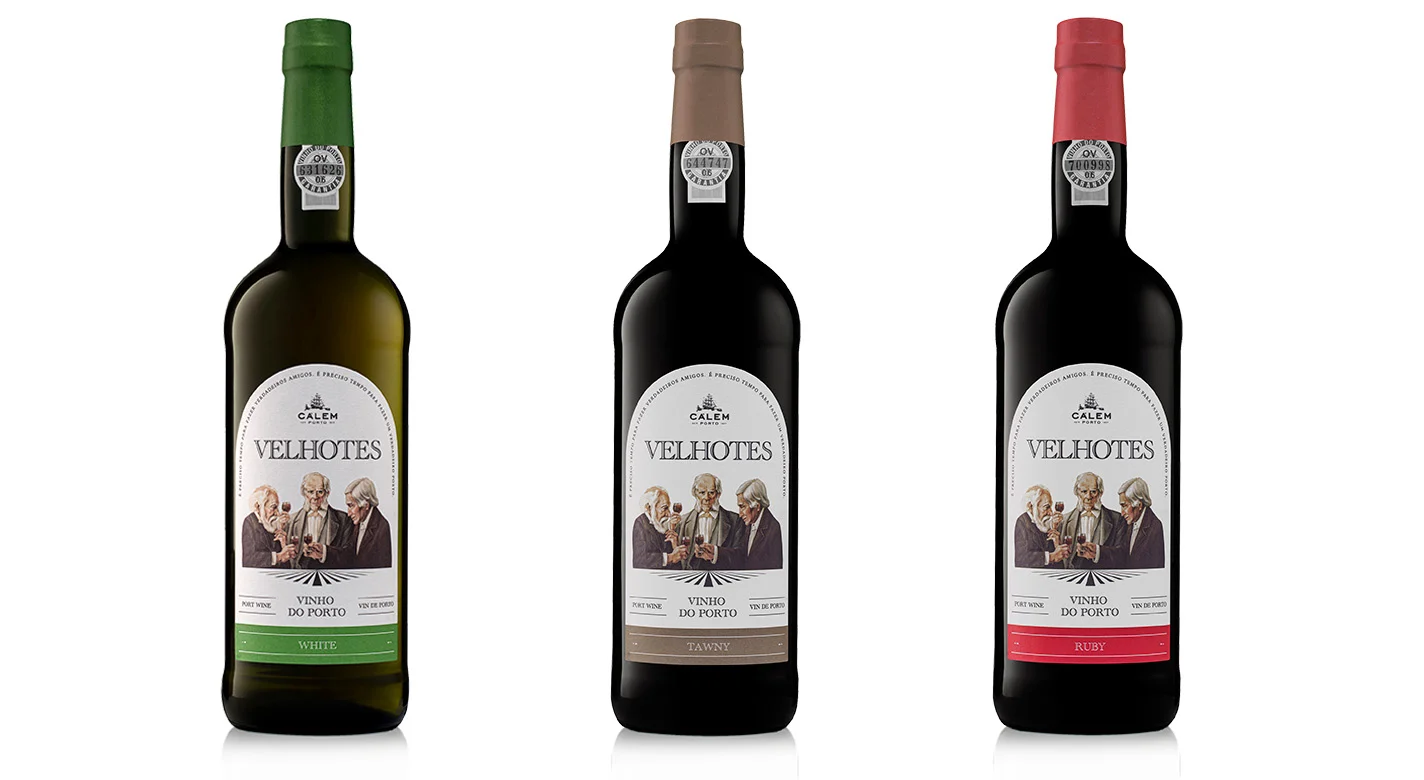
With over 90 years of history, Velhotes seeks to reconcile the strength of a historic brand with the need to win over new generations of consumers. A leader in the Portuguese Port wine market, with a market share close to or exceeding 20% in value and volume, the brand is focusing on modernizing its communication, innovating its experiences, and diversifying consumption occasions to reinforce its relevance. In an interview with... Grande Consumo, John Proença, brand manager Old FolksThe company explains how it intends to simplify the consumption of Port wine, traditionally associated with celebrations and special moments, and consolidate a leadership position based not only on price, but also on trust, quality, and emotional connection to the Portuguese people.
Velhotes has over 90 years of history. What is the brand's greatest asset today: recognition, trust, the emotional connection with the Portuguese people, or the ability to remain relevant at the point of sale?
It's difficult to choose just one, because the strength of Velhotes stems precisely from the combination of all these factors. It starts with the name itself – “Velhotes” – which is distinctive, relatable, and immediately memorable. Then, we have the three Velhotes represented on the label: an apothecary, a lawyer, and a judge, whose image has become a true icon and is part of the collective memory of the Portuguese.
The brand was born in 1934 and, over more than 90 years, has carved out its own space in the category and in the lives of consumers. This heritage generates recognition, trust, and an emotional connection that is very difficult to replicate. But legacy is only truly valuable if it remains relevant: in communication, at the point of sale, and during consumption moments. It is this combination of memory and contemporary presence that constitutes Velhotes' greatest asset.
When managing a brand that is so well-known and has such a deeply rooted identity, where is the line drawn between preserving its legacy and preventing the brand from becoming stuck in the past?
I think the key word is balance. Preserving the legacy doesn't mean repeating the past; it means understanding what elements make the brand recognizable and irreplaceable, such as the name, the three old men, the humor, and the brand's approachability, and finding new ways to make them relevant.
The brand's work must respect this memory, but always keep an eye on the future. The rebranding in 2023 is a good example: we modernized the visual universe and packaging , bringing them closer to the current communication tone, without losing the authenticity or historical codes of the brand. In 2024, the 90th-anniversary campaign went even further, transforming the bottle into a gateway to an augmented reality experience. In other words, we didn't change what Velhotes is – we updated how the brand relates to people.
Velhotes is often presented as "the preferred Port wine of the Portuguese". What factors explain this leadership and how has the brand managed to sustain it over time?
This statement is based on three complementary dimensions: sales, brand awareness, and preference. Velhotes is currently the leading brand in its category in the Portuguese market in terms of sales value and volume, consistently registering market shares close to or exceeding 20%, according to data from the Nielsen Portugal Markettrack Panel in July 2026. It also leads in the main brand awareness indicators for the category. In February 2026, the brand led all indicators, presenting a top-of-mind awareness of 26% and a total assisted awareness of 92%, according to Marktest data.
To these indicators we can also add a comparative study, which we carried out at the Continente Food Festival, with a sample of 533 participants, of whom 67,2% preferred Velhotes Tawny to another identical product from the brand's main competitor. The study was conducted through blind tasting and a corresponding survey by Multidados in July 2025. From this we can conclude that approximately two out of three consumers prefer Velhotes. Furthermore, for the second consecutive year, Velhotes was elected a Trusted Brand in the Port Wine category by Reader's Digest Selections. This last distinction is particularly relevant because it results from an open and spontaneous question to consumers, and in 2026 this leadership was significantly reinforced compared to the other brands in the category, which makes us very proud.
This leadership has been sustained through product consistency, high availability, trust, regular communication, and a continuous ability to keep the brand close and culturally relevant, without losing the codes that consumers recognize.
"Velhotes is currently the leading brand in its category in the Portuguese market in terms of sales value and volume, consistently registering market shares close to or exceeding 20%."
If it were possible to "deconstruct" Velhotes using numbers, which indicators best help to understand the brand's size: sales, household penetration, brand awareness, repeat purchases, distribution, or generational connection?
I would highlight four indicators. Three of them have already been explored in the previous question, namely those relating to brand awareness, market share, and preference. To these I would also add a distribution indicator, specifically 89,9% weighted distribution, according to the Nielsen Portugal Markettrack Panel data already mentioned, which reflects an extremely broad and relevant presence in the national retail market for Velhotes brand Port wines.
The brand spans several generations of consumers. What has changed most about the Port wine consumer in recent decades, and what remains surprisingly the same?
What has changed most is the way consumers choose and integrate beverages into their daily lives. Today, there is much more supply, more comparison, greater price sensitivity, and also a growing demand for light, versatile drinks associated with more informal consumption occasions. Younger generations do not necessarily reject alcoholic beverages or even tradition, but they demand that it be presented to them in an accessible, contemporary way that is relevant to their lifestyle.
However, consumers continue to seek quality and reliable products. The sharing aspect associated with Port wine consumption also remains very relevant. There continues to be a strong association with conviviality, family, celebration, and special moments. And it is also here that Velhotes has an advantage: it manages to unite generations around a brand that many have known forever, but which remains available to be rediscovered.
Port wine is a category strongly associated with tradition, but it also faces the challenge of conquering new consumption moments. How has Velhotes been working to simplify this category?
We have sought to remove some of the solemnity so strongly associated with the category, which we believe also limits it. Port wine doesn't have to be reserved only for Christmas, desserts, or formal occasions. It can be enjoyed at a gathering with friends, during a break, neat or on the rocks, or integrated into new forms and rituals of consumption.
Velhotes works towards this simplicity primarily through its communication tone: approachable, informal, cheerful, and unpretentious. The strategy involves generating curiosity about the category, highlighting different consumption moments, and establishing Velhotes as a current and relevant brand in consumers' daily lives.
Velhotes' communication has always relied heavily on approachability, humor, and a certain Portuguese essence. How can this tone be updated to speak to younger consumers without losing authenticity?
Humor continues to be an extremely transversal language, including among younger audiences. But it has to be intelligent, current, and recognizable. In the case of Velhotes, the humor works because it stems from the irreverent personality of the brand and the characters that bring Velhotes to life. We strive to work with biting humor that resonates with the Portuguese, addressing current issues without losing the identity of Velhotes.
In the brand's recent or longer history, what campaigns or communication moments have most contributed to building the Velhotes brand identity?
There are two particularly important recent moments. The first was the renewal and evolution of the brand image in 2023, which modernized the packaging, website , point-of-sale materials , and digital presence, creating a more coherent and contemporary brand expression.
The second was the 90th anniversary celebration in 2024. It was an integrated campaign, with a presence in outdoor communication, point of sale, digital, public relations and influencers, tastings, activations and packaging . A campaign in which augmented reality allowed consumers to travel through different decades accompanied by an Velhotes bottle and the three Velhotes themselves, combining history, technology, sharing and humor.
“We have sought to remove some of the solemnity so strongly associated with the category, which we believe also limits it. Port wine doesn't have to be reserved only for Christmas, desserts, or formal occasions.”
There is increasing talk about the "nostalgia market," both among the Portuguese diaspora and consumers who value brands with a sense of connection to history. What role does this emotional factor play in Velhotes' strategy?
It plays a significant role because, for many Portuguese people, both inside and outside the country, Velhotes is not just a bottle of Port wine: it's an image associated with the table, family, conviviality, Christmas, and other moments spent with Velhotes. This familiarity and closeness creates a particularly strong emotional connection in these markets, especially in France, Luxembourg, or Switzerland, where there are large Portuguese communities. It's important to ensure that those who grew up with Velhotes continue to recognize themselves in the brand, but also want to introduce and share it with the next generation. Emotion and closeness help us open the door, but contemporary relevance allows us to maintain the relationship.
In a more competitive, fragmented, and demanding market, what role can a brand like Velhotes play in the development of the Port wine category itself?
As Velhotes is a leading brand, it also has an increased role and responsibility in building value for the category, which goes beyond defending its own market share and leadership. Through relevant and contemporary communication, a broad presence in highly distributed points of sale, and brand tastings and activations, we also try, in an uncomplicated way, to bring more consumers to Port wine. Thus, we aim to be a leading brand capable of energizing and revitalizing the category, attracting new consumers, and helping to increase the category's visibility, accessibility, and attractiveness.
How does the brand balance innovation and consistency? Is innovation more in the product, the formats, the consumption moments, the communication, or the way it reaches the consumer?
Currently, innovation lies primarily in communication and the brand experience that reaches the consumer. This includes the constant communication we do digitally, at the point of sale, or outdoors during periods like Christmas. There is ample room for innovation in how we tell the story, activate packaging , use technology, work on the point of sale, and create new relationships and occasions around the product. We are also attentive to new consumption and product trends, constantly evaluating product innovations.
Looking ahead to the next few years, what is Velhotes' main challenge: recruiting new consumers, rejuvenating the category, strengthening consumption occasions, growing outside of Portugal, or continuing to defend its leadership in the national market?
The main challenge is to defend leadership in the national market, making it more sustainable in the long term. This naturally implies recruiting new consumers and rejuvenating the category, but also increasing the perceived value of the brand and thus having a relationship less dependent on price and more based on preference, quality, trust and brand relevance.
Advertise with us!