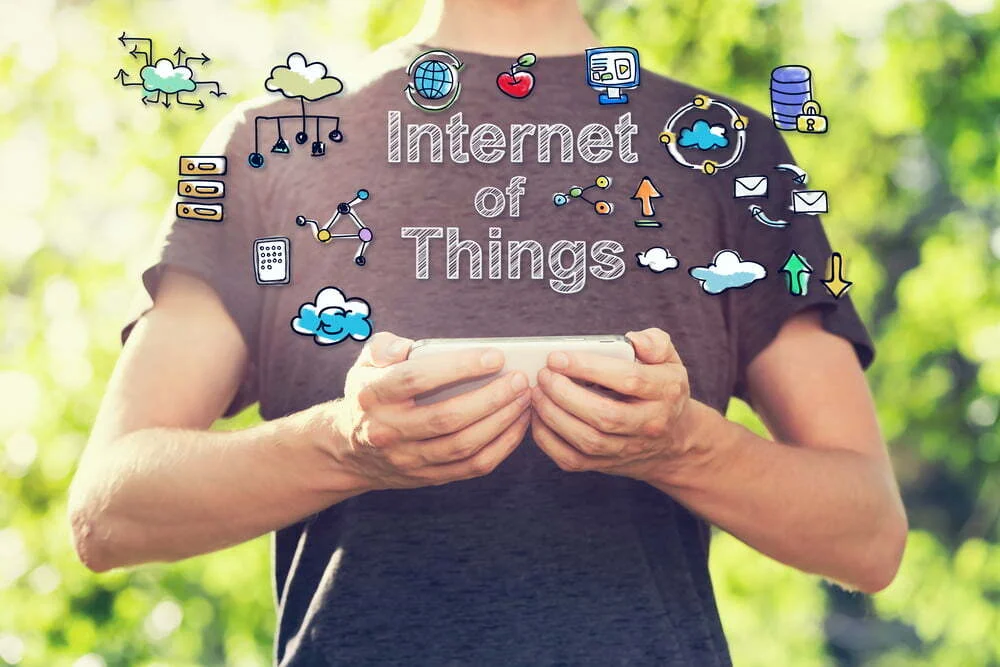
The economic value of the Internet of Things (IoT) could reach between €4,8 and €11,1 trillion globally by 2030. This is one of the main conclusions of the study "The Internet of Things: Catching up to an accelerating opportunity ," developed by McKinsey & Company, which consists of an analysis of the potential growth of IoT in the next decade and the factors that explain it.
The study results reveal that the potential economic value of IoT is concentrated in certain contexts where these solutions are implemented, such as in offices, factories, homes, healthcare, retail, and others. It is estimated that factories will represent approximately 26% of the potential economic value of IoT in 2030, followed by healthcare, representing about 10% to 14% of this value. B2B applications are where most of the value of IoT can be generated, accounting for approximately 65% of the estimated potential value in 2030.
In the home environment, the adoption and impact of IoT solutions have grown rapidly. Considering current trends, an acceleration in the adoption of these solutions in workplaces is predicted. On the other hand, value creation in factories, retail, and vehicles is progressing more slowly than expected.
Although IoT demonstrates significant economic potential, capturing it has proven challenging, particularly in B2B scenarios. The €1,4 trillion captured in 2020, while significant, represents one of the least optimistic scenarios mapped out in 2015 by the consulting firm.
Positive factors influencing growth
According to the report, users see real value in implementing IoT, recognizing it as an enabler of digital transformation and ongoing sustainability efforts in businesses and public institutions worldwide.
Furthermore, the last five years have seen remarkable technological advancements that allow for the large-scale implementation of IoT. Considering that networks act as the backbone of IoT, improved connectivity performance also serves as a stimulus for accelerating the adoption and impact of these solutions.
And what about the negatives?
However, there are also some factors that negatively impact the growth of IoT: change management, interoperability, installation, cybersecurity, and privacy.
Companies and governments often treat IoT as a technological project rather than an operational model transformation, meaning it ends up being led by the IT department without considering the necessary changes in governance, talent, and performance management processes. Capturing value at scale requires the collaboration of cross-functional actors to change people's behavior, systems, and processes, and to introduce dynamic performance management.
Furthermore, addressing interoperability challenges is crucial to unlocking the economic potential of IoT. The IoT landscape is still comprised of numerous closed systems, rather than universal systems, hindering integration and the ability of these solutions to use and exchange information with each other. One of the main challenges in the IoT landscape is also the connection between older computer systems, an obstacle that prevents many entities from achieving impact at scale.
Installation is also seen as one of the biggest cost issues in implementing IoT solutions at scale. Interoperability challenges mean that almost all large-scale implementations require customization, if not an entirely bespoke solution. The complexity of seemingly simple tasks, such as achieving secure connectivity, adapting legacy devices, and connecting to existing systems, discourages large-scale implementation.
There is also a growing concern about cybersecurity with regard to IoT, since the increasing number of endpoints offers vulnerabilities for hackers to exploit. Addressing this challenge requires heightened attention to security throughout the implementation process of IoT solutions.
Finally, privacy is a priority for many consumers today. Companies are grappling with the data that customers are willing to provide in exchange for lower prices or special offers in a retail context.
These challenges must be addressed through a concerted effort between policymakers, investors, suppliers, and even customers, in order to rapidly scale and achieve the full potential of IoT solutions.