Demand for logistics real estate is expected to grow in the coming years, despite challenging operating conditions, suggest occupiers facing a range of critical corporate issues, led by stricter ESG regulation and energy resilience.
The fourth European Real Estate Logistics Census was conducted during the summer of 2024 by supply chain market analysts Analytiqa on behalf of Tritax EuroBox plc, a real estate logistics investor in Europe, and Savills, an international real estate consultancy. 642 occupiers, investors, developers, owners, asset managers, consultants and agents from across the European market responded.
Challenging operating conditions
Although 51% of occupiers believe that business conditions are more favorable today than a year ago (compared to 42% in 2023 and 35% in 2022), 69% have reduced or delayed their overall business expansion plans due to current economic conditions. However, crucially, of the 69%, only 6% have suspended their plans indefinitely, while 32% have delayed them by one to two years and 24% by two to five years.
The survey suggests that new logistical requirements are likely to develop during the second half of 2024, in 2025 and subsequent years. 29% of occupants in the sample expect to need more space in the next 12 months, while 70% plan to maintain their current size. 53% of occupants expect to need more space in the next one to three years (an increase of 15 percentage points).
Expansion plans
For tenants looking to expand their business over the next one to three years, plans are focused on key Western European markets. Germany remains the most favored target market this year, cited by 26% of tenants with expansion plans, followed by France with 24%.
Possibly indicative of interest in re/nearshoring, the Czech Republic was cited as a target market by 10% of operators with expansion plans, almost double that of Poland (5%).
For those seeking new warehouse space in the next three years, 58% expect to acquire buildings with a usable area between 10,000 and 39.999 square meters. Retailers are more likely than manufacturers or 3PLs (“third-party logistics”) to generate demand for large warehouses (over 40,000 square meters) or smaller urban units (less than 5,000 square meters), reflecting the continuous evolution of the omnichannel model.
ESG and energy efficiency in focus.
When asked what could be "revolutionary" for their logistics sector, categories related to ESG goals/regulations, energy requirements, robotics, automation, AI technology, and the transport revolution were rated as important or very important by more than half of the respondents.
The most frequently cited reason, “Stricter ESG targets/regulations” (by 69% of operators), may suggest continued uncertainty surrounding the scope of future European Union regulation. This figure rises to 82% for 3PLs, which, when bidding for contracts, face increasing pressure from clients to ensure their operations meet higher ESG standards.
The most common sustainability/ESG measures implemented by occupiers in the last 12 months include tangible and measurable initiatives, such as energy efficiency measures (44%), waste reduction/recycling (36%), and renewable energy (28%). Renewable energy ceased to be the top priority in 2023 and moved into third place this year, likely due to lower energy costs.
Energy resilience
68% of occupants are increasingly aware of the need to obtain an adequate energy supply in the context of recent geopolitical events, existing infrastructure, and the advent of energy-intensive technologies such as automation and AI.
Over the past 12 months, 37% of occupiers invested in robotics/warehouse automation, 33% in predictive analytics/optimization, and 28% in electric vehicles, which will generate higher energy consumption. Robotics/warehouse automation is a trend that will continue, with 43% expecting to invest in it over the next two years.
From a real estate perspective, these factors will likely continue to support the shift to modern, higher-quality spaces with the necessary specifications to facilitate technology-based operations, provided these buildings have adequate power availability.
The electrification of fleets
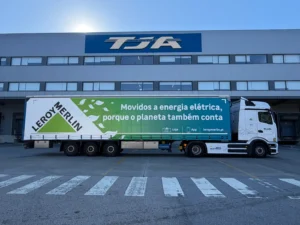
29% of occupants plan to reduce their use of carbon-intensive transport over the next three years (the number one priority cited when it comes to supply chain evolution over the next three years), but uncertainty remains regarding investment allocation: 23% of respondents made progress in installing electric vehicle charging points for private use in the last 12 months, but only 13% installed electric vehicle charging points for HGV/LGV (heavy-duty vehicles) during that period.
These factors reflect the uncertainty surrounding the many variables at play when it comes to transportation. These include fuel solutions, future capacity of electricity grids, local energy availability, and even the question of whether private charging is ultimately the best solution for logistics fleets.
Re/nearshoring on the horizon
25% of occupants stated that they had reduced (relocated) their supply chain to mitigate the risk of disruptions in the last three years.
Diversifying the supplier base and making routes more flexible remains on the agenda, with 27% and 17%, respectively, stating that they will do so in the next three years.
Reshoring will likely be a driver for the market in the coming years: 45% of respondents see this solution on the horizon, recognizing its "revolutionary" potential for logistics assets.
Employee well-being in focus.
74% of employers say that employee well-being plays an important role in their strategy.
Of these, 20% to 30% ranked the availability of public transport, public space and natural lighting as number one or number two priorities for employee well-being. However, unsurprisingly, canteens (60%), showers and lockers (43%) remained the most popular.
Follow us on: