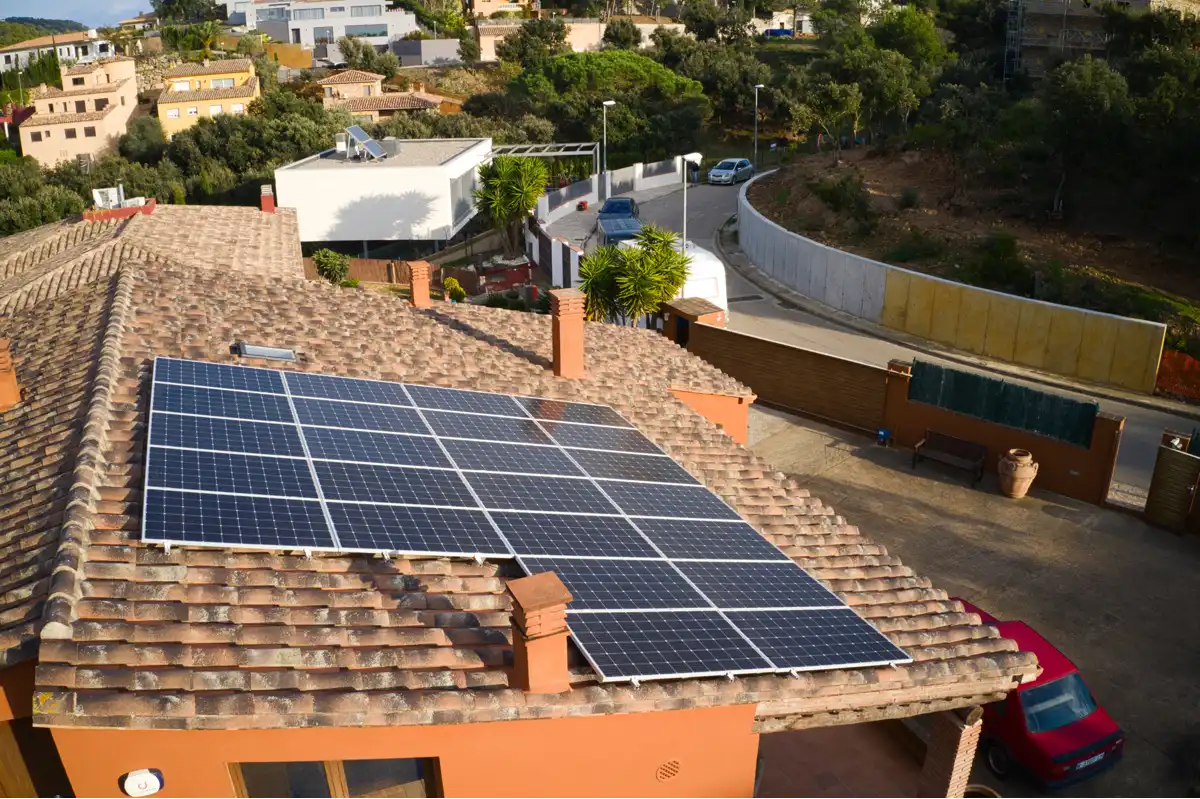
In a summer marked by record temperatures and historic peaks in electricity consumption , Portuguese families face the double challenge of maintaining comfort at home and controlling their energy bills. Between January and June 2025, according to data from REN, electricity consumption in Portugal reached a semester high of 26.229 GWh, exceeding the previous record of 2010 by 240 GWh. In June alone, consumption increased by 4,4% compared to the same month last year (3,1% considering seasonal adjustments), a direct reflection of the successive heat waves.
In the same month, mainland Portugal recorded an unprecedented temperature of 46,6 °C, the highest value ever recorded in June. This scenario is not unique to the national territory: Spain, France and Germany also saw increases in electricity consumption between 6% and 14%, with prices exceeding €400/MWh during peak demand times, especially in the late afternoon.
In light of this new climate and energy paradigm, it is becoming urgent to adopt practices that promote the resilience of Portuguese homes in the face of heat waves and rising energy costs. Otovo , a company specializing in solar energy, has compiled a practical guide with accessible measures for all families, helping them to reduce consumption, improve efficiency, and adapt routines for a more sustainable summer.
6 practical steps to make your home more efficient and save energy.
- Pre-cool the house during sunny hours.
Switching on cooling systems in the early afternoon, when solar energy is most available and electricity costs are typically lower, allows the house to retain cool air until late afternoon, when prices are higher and the grid is more strained. A Home Energy Management System (HEMS) can automate this process based on solar production and local price forecasts.
- Concentrate the use of household appliances in the middle of the day.
High-consumption household appliances should be switched on during peak daylight hours. This reduces the peak load on the electricity grid and avoids higher tariffs at night. According to Otovo data, the seven appliances with the highest domestic energy consumption are the refrigerator (approximately 662 kWh/year), the freezer (approximately 563 kWh/year), the television (approximately 263 kWh/year), the washing machine (approximately 255 kWh/year), the oven (approximately 246 kWh/year), the dishwasher (approximately 246 kWh/year), and the clothes dryer (approximately 231 kWh/year). Many modern appliances include timers or can be integrated with smart home systems to simplify this adjustment.
- Use the stored energy at night.
When batteries are available, storing electricity during the day and using it at night helps reduce exposure to volatile prices and improves self-consumption of solar energy. This is particularly useful during heat waves, when demand increases after sunset.
- Use blinds, shading, and insulation strategically.
Avoiding internal overheating can reduce the need for mechanical cooling. Closing blinds during the day, using reflective film on windows, or ensuring adequate insulation helps maintain a stable internal temperature with less energy consumption.
- Monitor prices and consumption with an SGE (Energy Management System).
Real-time monitoring of local electricity prices and household energy consumption allows for better decisions about when and how to use energy. An energy management system can also provide alerts during heat waves or peak demand, helping households plan accordingly.
- Minimize standby power consumption.
Turning off unused devices, especially during peak price periods, helps reduce overall consumption. Even small reductions become relevant during prolonged heatwaves, when electricity prices can rise unexpectedly.
Follow us on: