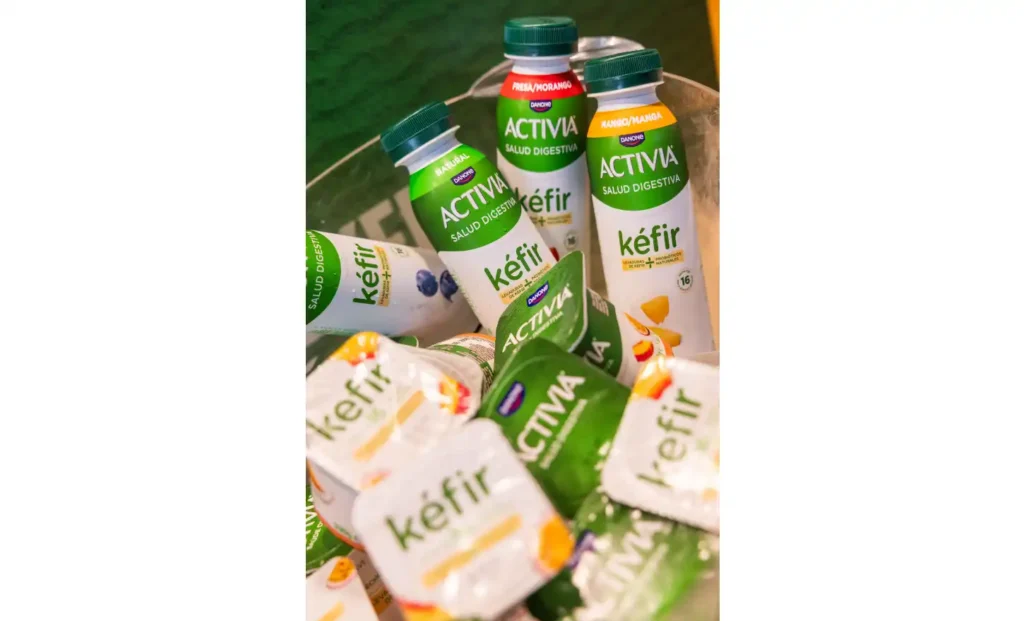
Danone chose certification as a tool to reinforce confidence in Activia Kefir. The distinction was awarded by AENOR during the event “ Kefir : Science that Feeds ”, held on September 29, 2026, and presented by the brand and the certifying entity as the first and only kefir certification on the Portuguese market at that time.
What underpins this guarantee? In statements to Grande ConsumoIsrael Carvajal Torres, from AENOR, explains that the entity verifies public commitments made by Danone to the consumer. Examples include double fermentation and the presence of bacteria and yeasts. The brand establishes the commitments, and AENOR verifies their fulfillment through a certification model that includes the production process and the product available on the shelf.
The decision arises in a segment that is winning over buyers and attracting a wider range of offerings, but whose growth does not eliminate doubts about what is being purchased. Data from Worldpanel by Numerator, presented at the meeting and identified as Kantar data, documents the expansion of household purchases. The 40dB study shows how the name and adjectives used on packaging shape consumer expectations.
To understand Danone's strategy, it's important to follow the path between the promise made to the consumer and how it is verified. The certification refers to the commitments that have been evaluated; their absence in other products does not, in itself, constitute proof of non-compliance or inferior quality.
What led Danone to seek certification?
Diogo Costa, Dairy Business Unit & Marketing Director at Danone Portugal, presented the certification from two perspectives. On the one hand, it aims to give consumers a guarantee that doesn't depend on mastering scientific or legislative details. On the other hand, it sees it as a validation of the company's investment in the development of Activia Kefir. According to him, this work took more than a year and included an attempt to soften the characteristic acidity of kefir to make it more palatable to the Portuguese consumer. The intention, he explains, was to reconcile this sensory adaptation with what the company calls " true kefir ." The expression belongs to the brand's discourse and was used at the event as a differentiating argument.
Lina Sá Pinto, Director-General of AENOR Portugal, for her part, framed the entity's work within conformity assessment, through certification, inspection, auditing, and laboratory analyses. She emphasized the independence and impartiality of this work and explained that, in this case, the verification covers the production process, in addition to analyses of the product and the presence of live crops.
From their perspective, the risk of trivializing the term kefir makes transparency especially important, particularly when consumers are willing to pay more for a product they consider beneficial for themselves or their family. Certification, they explained, is presented as a way to verify the company's message. To understand what it actually certifies, it's necessary to know the commitments being evaluated.
The next step will be to bring the certification to the consumer. Diogo Costa confirmed the start of a communication campaign after the certificate is awarded and the continued investment in this strategy. Additionally, the executive stated that the brand intends to continue exploring the segment, including both liquid and solid offerings, with the possibility of new products in 2026.
A traditional food whose composition matters.
Current interest in kefir revives a food with a history predating its widespread availability in Portuguese supermarkets. Pedro Brogueira, a doctor and president of the Portuguese Society for Innovation in Microbiome and Probiotics, places its origin in the Caucasus region and suggests it may have arisen accidentally through the fermentation of milk stored in leather pouches. However, the doctor notes that the precise origins of kefir are unknown. He explains that its association with well-being has long been part of the food's history.
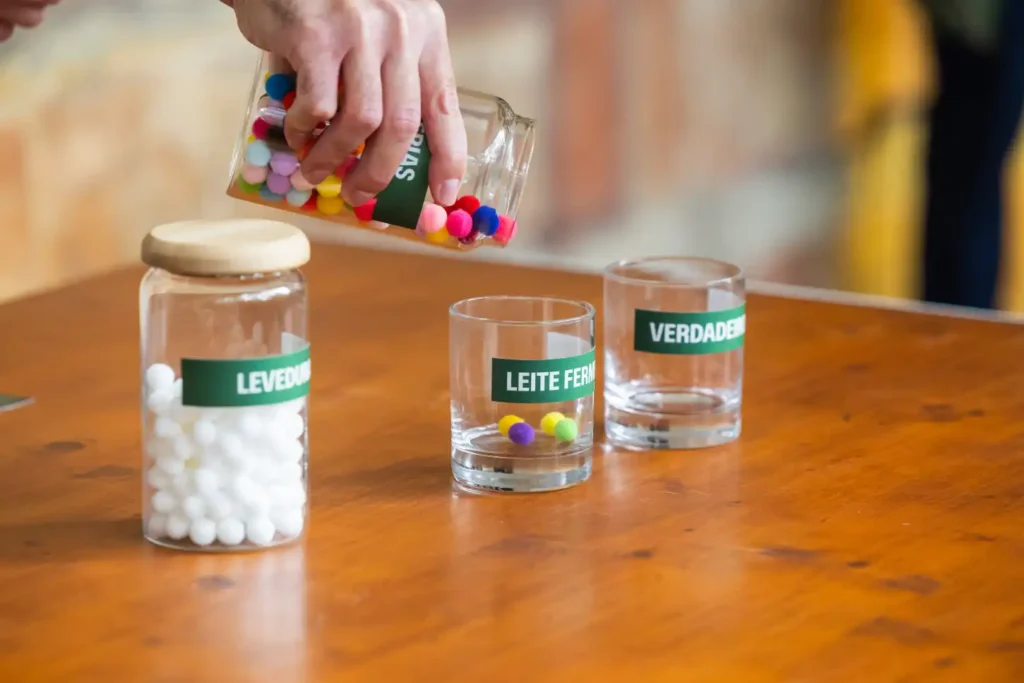
This information was supplemented by nutritionist Bárbara Oliveira, who described traditional kefir as the result of fermenting milk with kefir grains. Despite the name, these grains are neither seeds nor cereals: they are a complex matrix that brings together microorganisms. The combination of bacteria and yeasts was central to the explanation given by both speakers about what distinguishes kefir from other fermented milks.
According to the nutritionist's description, the process uses lactose from milk and produces lactic acid, contributing to the characteristic consistency and sour taste. This explanation refers to the fermentation process and does not allow us to conclude that any product marketed as kefir is lactose-free. The specific composition remains relevant to understanding the food that reaches the consumer. Furthermore, as Pedro Brogueira warned, similarities in texture or taste are not enough to consider two products equivalent. It is this distinction that links the panel discussion to the designation " mild kefir " and the commitments evaluated by AENOR.
A purchase that gained momentum.
In the 52 weeks ending June 14, 2026, kefir reached a penetration of 21,2% in Portuguese households, according to Worldpanel data presented by Carolina Jordão of Kantar at the event. The indicator was at 10,5% in the equivalent annual period of 2023, rose to 13,5% in 2024, and reached 15,7% in 2025. In three years, the proportion of purchasing households more than doubled.
This progression has propelled kefir from 13th to 10th place in the ranking of fermented dairy product segments presented by Worldpanel. The evolution reflects its reach within households: penetration identifies the proportion of households that purchased the product during the observed period, not its sales share or the frequency with which each person consumes it.
Carolina Jordão's interpretation is that kefir has gone from a trend to an established category in Portuguese homes, maintaining potential for expansion through the entry of new buyers. The presentation links this trajectory to the search for food products with specific benefits and situates the segment within a broader movement of valuing functional products.
Growth isn't just about conquering new households. Worldpanel identifies an increase in purchase frequency, spending per store visit, and the quantity purchased on each occasion. In terms of formats, liquids have greater market penetration than solids, and medium-sized packages, from 150 to 499 grams, have a wider reach than small or large ones. Natural and fruit-flavored options are emerging as closely related.
The buyer profile reinforces the presence of adults and families. Independent or married adults without children represent 26,7% of kefir buyers, compared to 24,9% for all fermented dairy products. Couples with adult children account for 15,2%, above the 11,5% in the broader category, while retirees represent 19,6%. These figures describe the composition of the buyer universe; they do not mean that these percentages of each population group actually buy kefir.
Brands and retailers are expanding the segment.
The expansion involves manufacturer brands and distribution brands. According to Worldpanel, Danone registers a penetration of 4,6%, an increase of 2,6 percentage points compared to the previous year. Nestlé shows a higher reach of 8,7%, with a rise of two percentage points. Danone thus appears with the largest increase among the highlighted manufacturer brands, although Nestlé reaches a larger proportion of households.
Among the distribution brands, Lidl has a penetration of 5%, Continente 3%, Aldi 2,8%, Mercadona 2,5%, and Pingo Doce 2,1%. All registered increases in the table presented. These measures are not market shares and should not be added together: the same household may buy kefir from several brands.
The retailer analysis also points to a cross-sector expansion of kefir. In Worldpanel's final assessment, brands and retail operators play complementary roles in the segment's development. The competitive landscape helps contextualize Danone's decision: certification comes in a market that is expanding and where differentiation also depends on the information accompanying the product.
Knowing the name is not the same as knowing the product.
The 40dB study, presented by Bráulio Gomez Fortes, added a different perspective. One thousand online interviews were conducted with residents in Portugal aged between 18 and 65, with cross-quotas for sex and age and quotas by region. The fieldwork took place between May 25 and June 1, 2026. The technical data sheet indicates a margin of error of 3,1 percentage points, for a 95% confidence level.
Of those surveyed, 81% had heard of kefir. Within the total sample, 17,3% stated that they consumed it regularly and 32% said they had consumed it a few times. Another 31,7% knew of the product but had never consumed it, and 19% did not know of it. The 49,3% highlighted as consumers therefore correspond to the sum of regular consumption and occasional experimentation.
This result is not directly comparable to the 21,2% penetration rate reported by Worldpanel. One study asks individuals if they know of or have ever consumed kefir; the other observes household purchases over a 52-week period. The difference between the numbers stems from different measures, populations, and time periods, and therefore does not, by itself, allow us to conclude that there is a discrepancy between declared consumption and purchases.
Bráulio Gomez Fortes frames the interest in kefir within what he calls the " self-care economy ." In his view, the consumer buys a fermented food, but also an idea of well-being. The presentation connects the social significance of the product with concern for the microbiota and health. This framing describes expectations and motivations for consumption; it does not equate to demonstrating the clinical benefits of the products under analysis.
What is a mild kefir?
In response to the question of what they would understand by a product called " mild kefir ," 29,8% of respondents chose the option of a kefir that is easier or more pleasant to consume. Another 28% associated the term with a smoother or creamier texture, and 16% with a milder flavor. Only 18,7% interpreted it as a product different from kefir due to its composition. The remaining 7,5% responded that they did not know.
The three interpretations linked to the consumption experience account for 73,8% of the responses. The result shows that, for most participants, the adjective refers to ease of use, texture, or flavor. This alone does not allow us to say that all these consumers consider the products identical in composition or health effects, but it reveals that this difference is not the main message they take from the name.
Among participants classified as consumers, the proportion associating the designation with a different composition rises to 22,2%. Even so, within this group, the most chosen option remains that of a kefir that is easier or more pleasant to consume, at 32,4%. Experience with the product seems to favor some differentiation, without eliminating the predominance of sensory associations.
In comparing the two designations, the 40dB graph favors " mild kefir " in terms of attractiveness, consumer adaptability, and ease of consumption. The biggest difference is in this last attribute: the difference between responses favoring kefir and " mild kefir " is 36,4 percentage points less. In terms of quality, the data shows a 9,2 percentage point advantage for kefir. The preference suggested by the adjective does not, therefore, extend uniformly to all attributes.
The presentation summarizes the differences between groups with the phrase " the less you know, the more you value 'mild kefir '." Participants unfamiliar with kefir gave the " mild " version a relatively more favorable rating than consumers in several attributes. The central idea is that the designation manages to build a positive image even among people without experience with the product.
From perception to composition
40dB, however, starts from a position that should be distinguished from the survey results. In the presentation, " mild kefir " is described as a "superior quality" product, and the designation is considered likely to mislead the consumer. Bráulio Gomez Fortes argues that a yeast-free product should be presented as "milk fermented with kefir bacteria ," explicitly stating its nature and composition.
These are conclusions and recommendations presented at the event. Consumer responses document the meaning they attribute to the words, but do not constitute a laboratory analysis of the existing offer nor do they demonstrate a hierarchy of quality or health benefits among all products sold under these designations.
The relevant distinction for the debate lies in the presence of bacteria and yeasts and in the fermentation process. It is also here that the word " mild " requires caution: describing a sensory characteristic does not, by itself, clarify which cultures are present in a product. The development reported by Danone itself sought to reduce the acidity of its kefir, showing that the taste experience and compromises regarding composition must be analyzed separately.
Public commitments subject to verification.
According to Israel Carvajal Torres, the model used is that of commitment certification. The company begins by analyzing consumer needs and establishes the commitments it intends to make publicly. In the case of Danone, the examples identified by the manager are double fermentation and the presence of yeasts and bacteria. AENOR's role is to verify whether the product and the process correspond to what the company has declared.
The person in charge frames this model within the absence of a specific certification standard for kefir. The explanation concerns the chosen certification instrument and does not equate to stating that the product is outside any food safety framework. Nor does it establish a universal standard for all operators: the commitments belong to each company.
When asked about the possibility of the model serving as a basis for other brands, Israel Carvajal Torres explains that the methodology can be applied to different organizations and sectors. What changes is the content of the commitments to be verified. It is not, therefore, a method reserved for Danone, although the object of this certification is the company's public statements about its product.
This distinction allows for a clearer definition of the guarantee. The certificate attests to the fulfillment of the evaluated commitments. The description given by AENOR does not present the certification as a comparative study of the entire offer nor as a clinical demonstration of the superiority of Activia Kefir compared to other foods.
From the production line to manufacturing.
The verification process, as explained by Israel Carvajal Torres, does not end at the production unit. AENOR verified the manufacturing and traceability of the product all the way to the Spanish and Portuguese markets, seeking to confirm that what reaches the shelves corresponds to the product manufactured according to the commitments made.
The exercise is also done in reverse. Starting with a product found in the supermarket, the entity analyzes the reference and reconstructs the upstream path, up to the point of manufacture. The objective, explains the person in charge, is to confirm that the products in whose production the yeasts were introduced are the same ones that are available on the market.
AENOR also conducts laboratory analyses with samples collected directly from the shelf. It doesn't just work with products sent by Danone: it goes to the supermarket, collects a sample, and analyzes it to verify compliance with commitments. The combination of traceability and point-of-sale collection thus links process verification to the product that the consumer can actually buy.
The model allows for changes, but these must be reviewed. If the company changes a commitment, for example the number of strains it declares, this new information must be re-verified.
For brands and retailers, the data presented provides opportunities to recruit buyers and consolidate purchasing habits. At the same time, the 40dB study shows that the language used in the storefront contributes to the construction of expectations: "smooth" is primarily understood as a consumer advantage, without most people associating it with a difference in composition.
Certification adds a way to verify what the company promises, but its informational value depends on the clarity of those commitments. In the case presented, the concrete explanation involves bacteria and yeasts, double fermentation, manufacturing control, traceability, and samples collected at the supermarket. It is this information that allows the consumer to understand the scope of the guarantee and make a choice in a segment that is increasingly present in their shopping basket.
Advertise with us!