The lockdowns associated with the Covid-19 pandemic and the resulting shift in work culture to working from home have transformed the beauty market.
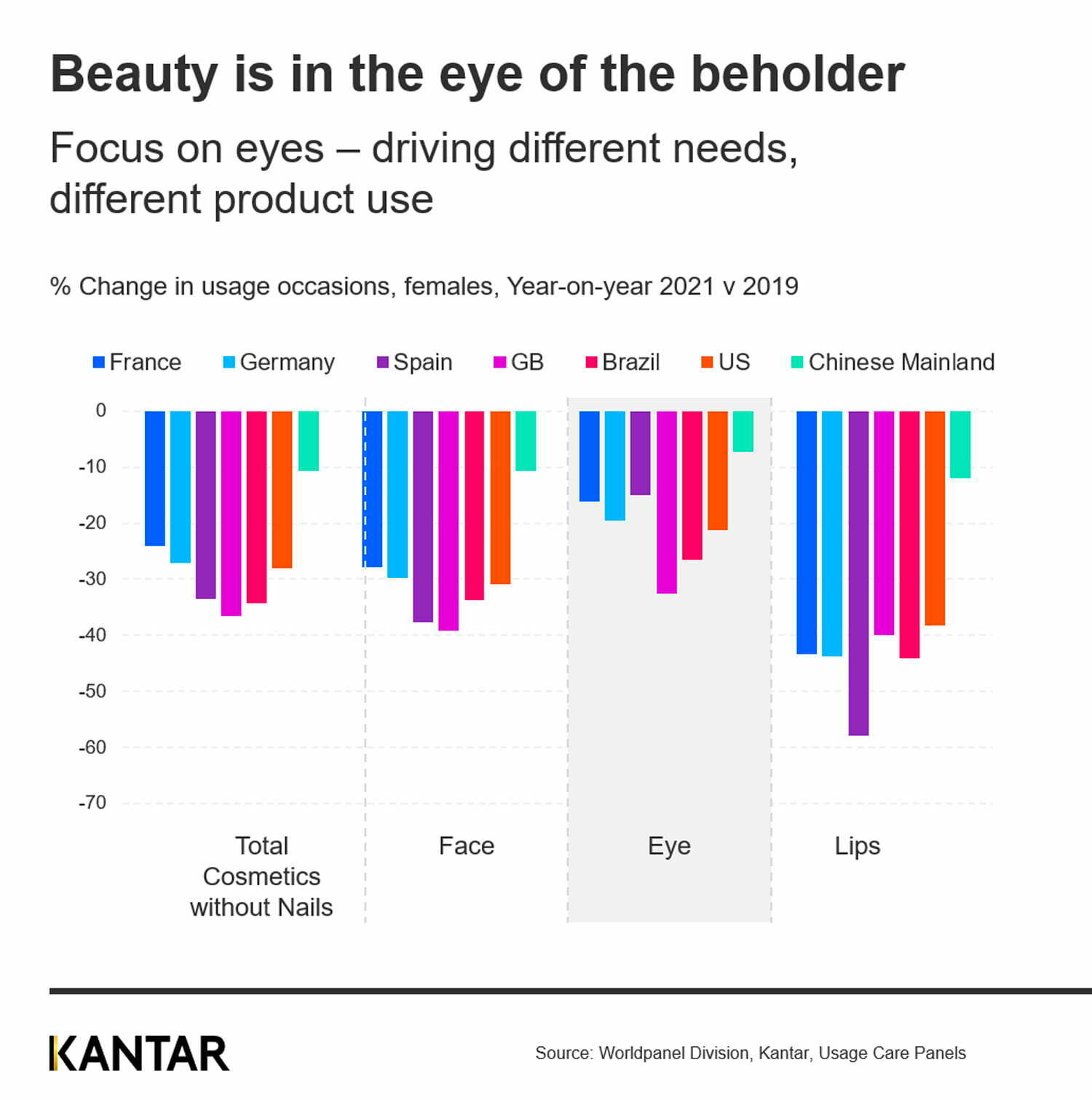
Kantar's data shows an decrease significant do use de cosmetica, in all os markets analyzed by the Worldpanel division, on o use weekly a come down 28 % em comparison on os levels pre-pandemic e 31 % em relationship a there five years, an time that as women are opting for routines closest simple.
O study also identifies that closest Buyers are a choose by less occasions de use, but from more quality. O increase do use de products de beauty premium, together on o and growing da attorney de products natural, that passed on of em media, 18 % the sales, em 2017, all with 24 %On 2021 helped o market a recover all with levels de revenue pre-pandemic.
The report “On Trend: The evolving beauty consumer" analysta os habits de purchase de closest de 300 k people e aggregates Protocols em 20 countries e habits de use daily the women em sete great savings all with understand o simulator de two years de confinements, of the change de priorities e Regarding the maintenance of teleworking. O study reveals an attorney increasing de products de beauty premium, during a pandemic, um increase de 6% nose category Face & Makeup. As category de products de care capillaries e body have state in emphasis, crescendo em both of them os years da pandemic.
Beauty routines transformed
“ The study shows a global trend towards fewer occasions for makeup use, particularly evident among European beauty consumers ,” confirms Ashley Kang, Global Head of Beauty Worldpanel Division. “ Occasions for face and lip makeup have decreased significantly, and there has been a greater focus on eye makeup, which may be a consequence of mask use during the pandemic .”
The focus is now on fewer beauty products, those that are long-lasting and can be applied quickly. Consumers are using makeup less frequently compared to the pre-pandemic period.
During the pandemic, the percentage of women who opted to wear their hair longer increased from 58% in 2017 to 62% in 2021. Simultaneously, women chose to wash their hair less frequently, dropping by almost 10% in five years, to an average of 2,8 times per week.
Illustrating a trend de premiumization, although due to its lower usage, os conditioners e os Treatments capillaries have grown em value, generating um and growing de 5% em 2020in the face of 2019, and de 7% em 2021In the face of 2020, this trend has been driven by demands for specific solutions to help promote hair growth. products that aim terms specific, including a is de hair e dandruff, have grown five times closest do that a fee overall do market de shampoos, aumentando 10 %, em 2021 while o market total grown up only 2%.
environmental awareness
“ Natural and vegan cosmetics continue to grow in popularity as the world becomes more aware of ingredients and sustainability in beauty products ,” Ashley Kang also notes.
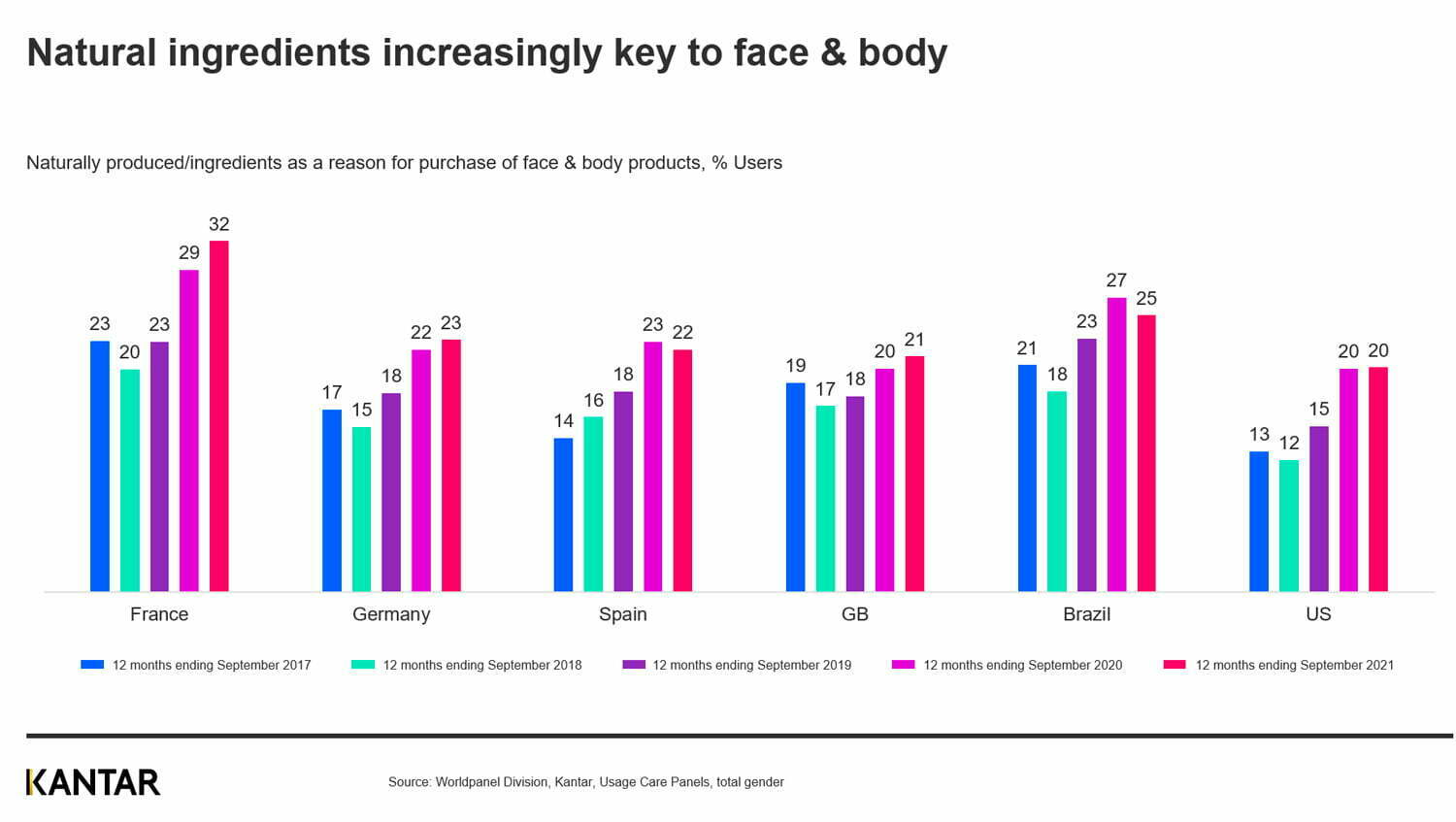
Consumers seeking and purchasing natural ingredients in face and body products grew from 18% in 2017 to 24% in 2021. The largest increase was observed in France, where the shift went from 23% of consumers in 2019 to 32% in 2021.
"Os consumers conscious of the environment also are willing a pay um extra by products sustainable e natural, , the mirror o study 'Who Cares, Who Does'. As families eco-active spend closest do that a average the families em products de beauty, on as families french eco-ativas a spend closest 5% in each act de purchases”, details.
The study highlights an opportunity for beauty brands to understand the lifestyle changes triggered by the pandemic and, therefore, the evolution of consumer needs. Although consumers are looking for simpler routines and a “natural” look, this does not mean they are suddenly abandoning the category. In the skincare category, “sustainability,” “natural,” and “derma” are some of the premiumization routes globally. With the increasing number of women wearing long hair, treatments represent a growth opportunity, along with functional shampoos such as anti-hair loss and anti-dandruff shampoos. Makeup will continue to face some challenges. Convenience is now key, and long-lasting products will enjoy success, Kantar argues. “ In economically challenging times, it ’s not that consumers aren’t spending, but they are spending more wisely , making the most of their purchasing power , whether to simplify their lives , address their values , or pursue their aspirations , ” it concludes.