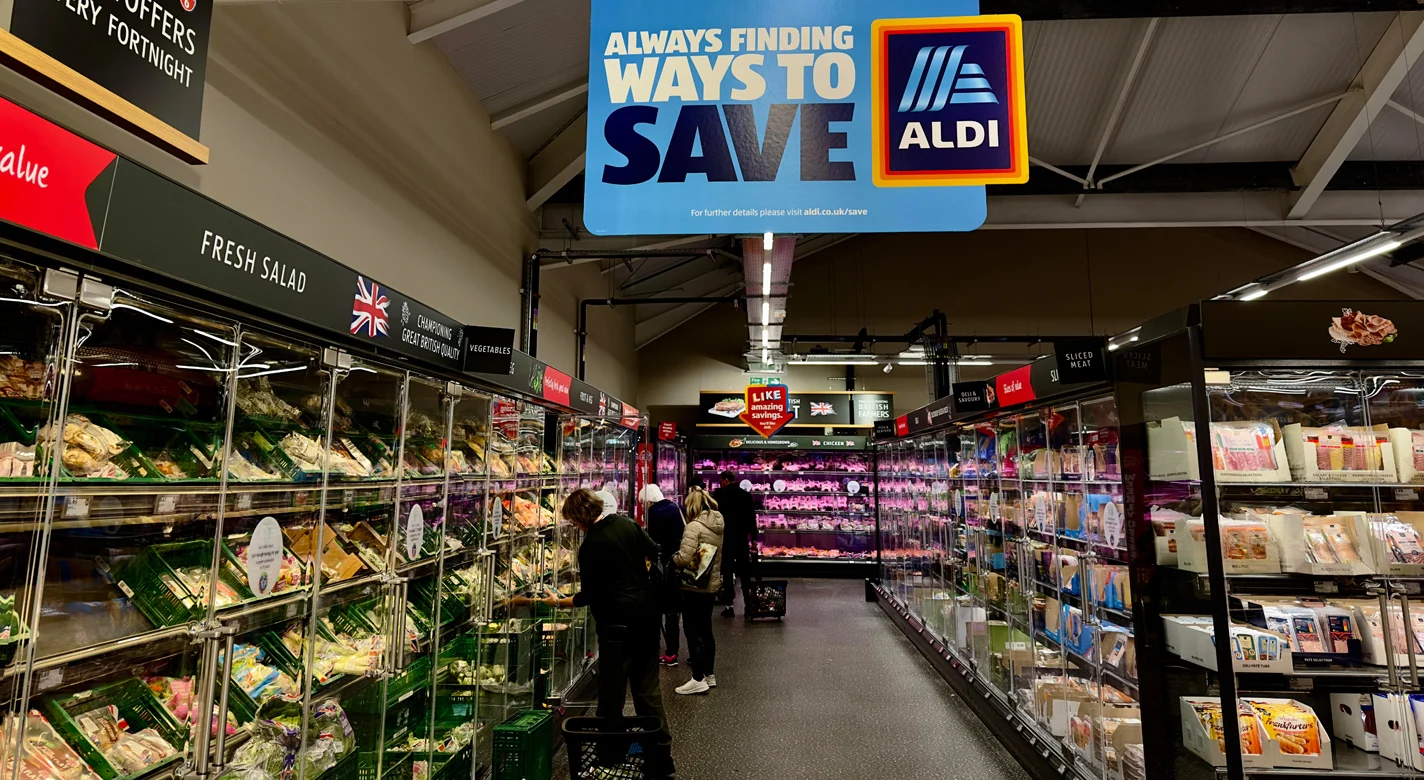
Aldi and Lidl will now be subject to stricter rules on real estate deals in the UK, after the Competition and Markets Authority (CMA) decided to classify them as large food retailers.
The decision, announced on October 22, covers Aldi, Lidl Great Britain and Lidl Northern Ireland, which will now be included in the group of operators covered by the Groceries Market Investigation (Controlled Land) Order 2010.
This system was created to prevent large supermarket chains from using real estate contracts as a way to restrict competitors from establishing themselves in the same geographic areas.
Exclusivity clauses under greater control.
British regulations seek to limit certain land and property deals that could harm competition in the food retail sector. Among the mechanisms covered are contractual clauses that prevent or hinder the use of properties by competing supermarkets. These restrictions can arise, for example, in contracts associated with the sale of land or the lease of commercial spaces.
According to the CMA, the existence of limitations of this nature can reduce the purchasing options available to consumers and hinder the entry of new operators into a given local market.
The decision prevents Aldi and Lidl from including prohibited restrictions in new agreements and allows existing contracts to be reviewed by the authority, following requests submitted by owners, property developers or competing operators.
Discounters will now have the same obligations as large groups.
Until now, the regime applied to seven major distribution groups: Asda, Co-op, Marks & Spencer, Morrisons, Sainsbury's, Tesco and Waitrose. With the new decision, Aldi and the two Lidl entities operating in Great Britain and Northern Ireland will now be subject to the same framework.
The change reflects the evolution of the British market, where the two discounters have gained a significant position in food distribution. According to the CMA, Aldi and Lidl are currently among the five largest food retailers in the United Kingdom in terms of market share. The size achieved by these operators justifies, in the authority's view, the application of the same competition obligations.
The decision was preceded by a public consultation.
CMA initiated the assessment procedure in March 2026 and submitted a provisional proposal in August. During the consultation, operators such as Morrisons, Waitrose, and Iceland expressed support for the inclusion of Aldi and Lidl in the scheme.
According to the authority, the companies now covered did not submit any comments on the proposal during the designated phase. The final decision was published on October 22, concluding the procedure.
The CMA believes that preventing anti-competitive real estate restrictions can contribute to increasing the number of supermarkets available in a given area. The possibility of new operators entering the market could strengthen competition on prices, product range, and services.
However, the decision does not oblige Aldi or Lidl to sell establishments, close stores, or abandon their expansion plans. Nor does it generically prohibit all exclusivity agreements: it covers the restrictions foreseen and prohibited by the specific regime.
Advertise with us!