
More than 510 million packages have been returned since April 10th, with a collection rate of approximately 44%, exceeding the 40% target set for 2026. This is the assessment of the first months of the initiative, presented by Lia Oliveira, Marketing and Communications Director of SDR Portugal, in an interview with [source missing]. Grande ConsumoWith retail taking on a central role in being closer to consumers, the priorities are to strengthen the network, simplify the returns experience, and consolidate new habits, on a path that aims to achieve a 90% collection rate by 2029.
Since its launch on April 10th, what has changed in the way Portugal returns beverage packaging covered by the program? timeWhat is your assessment of this period?
The implementation of the return system brought a structural change to the way citizens return beverage packaging covered by the system. For the first time, this packaging now has a dedicated return circuit, associated with a 10-cent deposit, which is returned to the consumer when they hand the packaging over to a collection point.
The results of these first few months are very positive. Since April 10th, more than 510 million packages have already been returned, demonstrating strong citizen participation and the mobilization capacity of the entire value chain.
More than the volume achieved, these results demonstrate that returning items is becoming a habit for citizens in Portugal. The challenge now is to consolidate this behavior and continue to guarantee an accessible return experience.
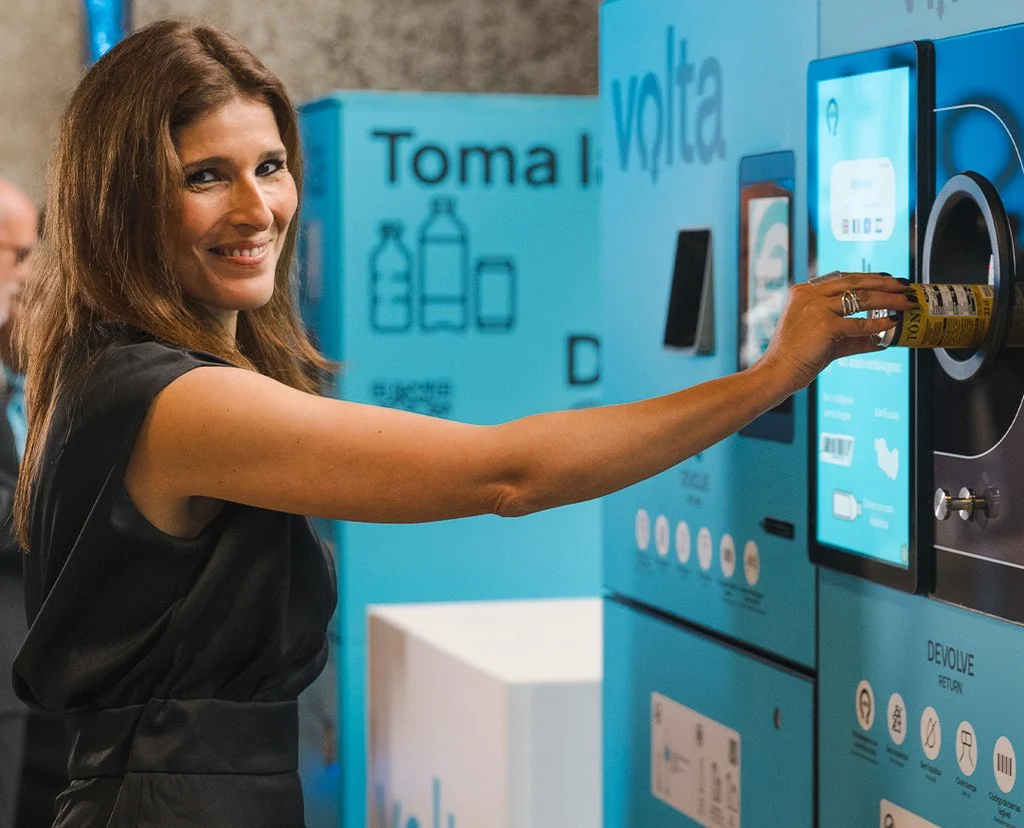
Lia Oliveira, Director of Communication and Marketing at SDR Portugal, highlights that the collection rate is above the target set for 2026, the first year of operation of the system, and believes that the clearer and simpler the experience, the greater the likelihood that returning items will become a daily habit.
What figures help us put this balance into perspective, in terms of returned packaging, collection rate, and operational return points? How do these compare to the objectives set for this phase?
The numbers give a very concrete idea of the scale the program has already reached. Since its launch on April 10th, more than 510 million packages have been returned. The collection rate is currently around 44%, above the 40% target set for 2026, the first year the system will operate.
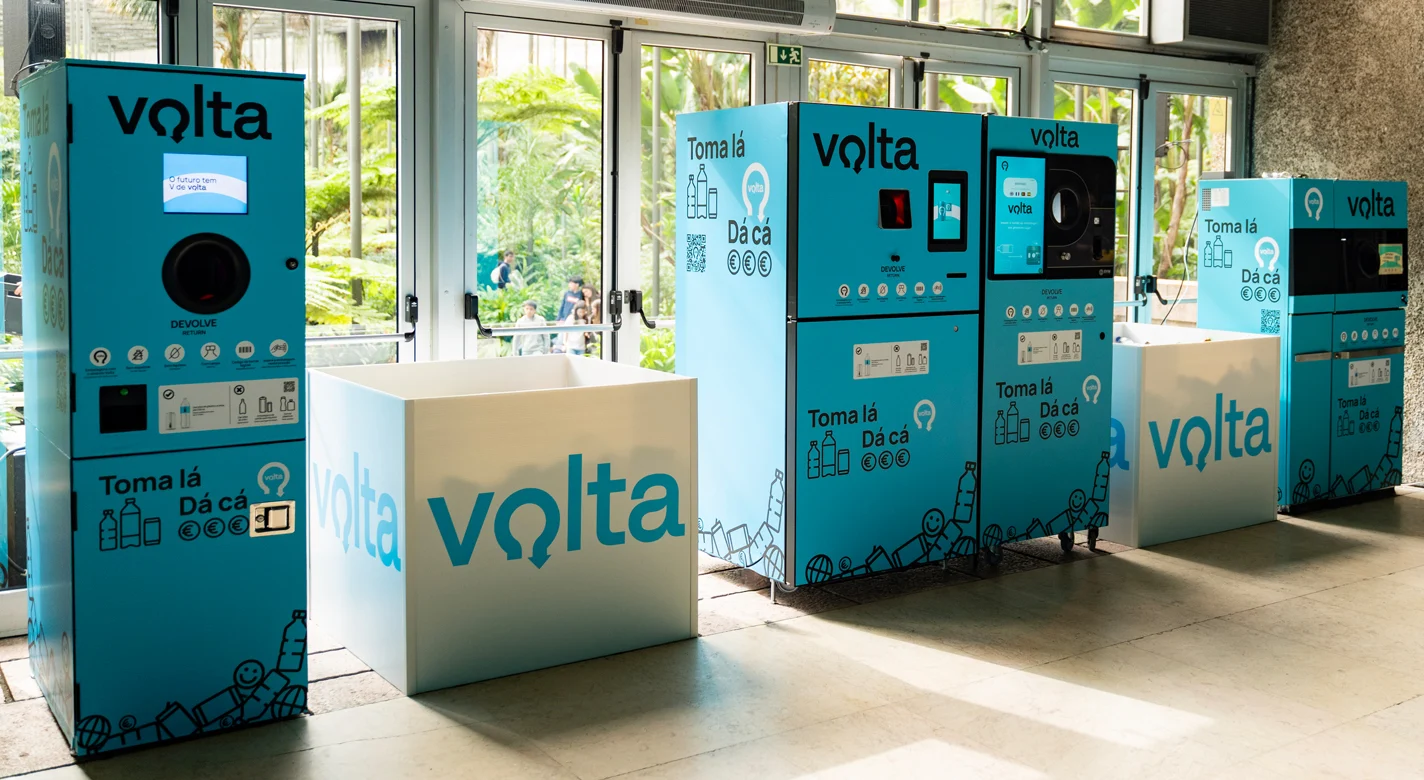
The network already has more than three thousand automatic Volta Points, complemented by manual Volta Points , a network of Volta Kiosks , which will continue to expand, as will the Volunteer Network.
In the case of the kiosks, the goal is to reach 50 units in 38 municipalities. Currently, eight are in operation, in Albufeira, Almada, Barcelos, Cascais, Funchal, Ponta Delgada, Portimão and Vila Nova de Famalicão, and another four have already been contracted. This solution allows for a more efficient response to returns of large volumes, particularly in the Horeca channel, but also to consumers who have accumulated a significant amount of packaging.
The Volunteer Network, in turn, allows for increased coverage through the participation of entities that wish to offer return solutions in their spaces.
This is a very positive development for a system that began operating just a few months ago and continues to expand its response capacity.
What have they learned about customer engagement? Can they already see to what extent returning items has become a habit, and what still prevents more regular participation?
The evolution of the number of returns shows that there is very significant participation on the part of citizens, but it also allows us to understand that the introduction of a new system happens in stages.
First, it was necessary to publicize the process : which packages are covered, where they can be returned, and how the deposit and refund work. Now, the challenge is to transform this knowledge into an increasingly automatic habit.
It is also natural that doubts persist as consumers begin to use the system on a daily basis. Therefore, communication is keeping pace with this evolution. If in the first phase the objective was to explain how the system works , in this phase we seek above all to clarify doubts and demystify ideas that continue to circulate.
It is in this context that the Voltómetro (Voltometer) emerges, a campaign based on true or false questions, which seeks precisely to demystify doubts that still exist about the system . It is a simple and accessible way to answer questions that arise in the daily use of the system and to reinforce consumer literacy about how it works.
We believe that the clearer and simpler the experience is — knowing what to return, where to return it, and how the refund process works — the more likely it is that returns will become a natural part of daily life.
“An effective return network is not measured solely by the number of existing return points. It is also measured by proximity, responsiveness, and suitability to different return needs. Therefore, the coverage of the return system has been significantly consolidated since its inception and was designed to respond to different usage profiles and the characteristics of various territories.”
How has network coverage evolved, and where do you identify the greatest need for reinforcement? What role do large-scale distribution and local commerce play in building an accessible network in different territories?
An effective return network is not measured solely by the number of existing return points. It is also measured by proximity, responsiveness, and suitability to different return needs. Therefore, the return coverage has been significantly consolidated since the system's launch and was designed to respond to different usage profiles and the characteristics of various territories. Automatic return points , manual return points, return kiosks , and a Voluntary Network (which is now beginning to expand) are available, allowing citizens to have different solutions for returning their packaging. They can also always return their beverage packaging to the restaurants or cafes where they purchased it.
Large retailers play a crucial role, not only because of their ability to provide automated equipment with high collection capacity, but also because of how frequently consumers visit these establishments. It's a network that's integrated into shopping habits and, therefore, is extremely important for access to the system.
At the same time, local commerce and manual return points are fundamental to ensuring capillarity, especially in areas where the presence of large supermarkets is less common.
Our priority, therefore, is to continue adjusting the network to the actual use of the system, identifying where there is greater pressure or need for reinforcement, and working with different partners to ensure that the return of packaging is increasingly simple, accessible, and integrated into the daily experience of consumers.
Behind every return are the industry, the retail sector, the logistics operators, and the management entity. How are responsibilities divided, and where was it most challenging to coordinate the work among all of them?
The return system is, by definition, a system that depends on the coordinated participation of the entire value chain. The industry and packers ensure the financing of the system through the extended producer responsibility model, while retail plays a key role in providing return points and in daily interactions with consumers.
Logistics then ensures the collection of packaging at different points, its transport and forwarding to Counting and Sorting Centers, where it is counted, separated and prepared for the next stage of the process. SDR Portugal is responsible for the overall management and coordination of the system, ensuring that these different stages function in an integrated manner and that the packaging follows the defined circuit until it is sent for recycling.
One of the biggest challenges in these first few months has been precisely coordinating a large-scale operation involving thousands of points of sale, different operators, producers, distributors, and retailers, while simultaneously ensuring that processes are understood and applied consistently throughout the network.
Implementing a system of this size naturally requires a learning and adjustment process. As return volumes increased, it became possible to identify different operational needs, ranging from the capacity of collection points to logistics and the handling of large volumes.
This learning process has allowed us to adjust operations and reinforce solutions where they are most needed. The result we see today, with more than 510 million packages returned in just a few months, also demonstrates the capacity of the entire value chain to respond to a structural change in how these packages are managed in Portugal.
For retailers, receiving returned packaging requires space, labor, and logistics. How are these costs covered, and what conditions do they seek to ensure for the participation of return points of different sizes?
The retailer's participation in the return process is framed within the extended producer responsibility model, through which the system is financed by the value chain. Therefore, the costs associated with managing the packaging covered by the system do not fall exclusively on the establishments that ensure the return.
SDR Portugal manages and coordinates the system, including the processes associated with the collection and forwarding of packaging, while the different return points have operational responsibilities that vary according to their size, characteristics, and collection model.
That is precisely why the network was designed with different return solutions. Large retailers often have the capacity to accommodate automated equipment and high volumes of packaging, while local shops and other points of sale may have different needs, particularly through manual collection.
The goal is to ensure that participation in the system is operationally feasible for different types of establishments, taking into account the available space, the volumes of packaging received, and the capacity of each point of sale.
As the system evolves and volumes increase, the return process also adapts to the needs of different partners, seeking to adjust operations and the network to the characteristics of each situation. An effective return network cannot be based on a single model: it must combine solutions suitable for large retailers, local businesses, and other points of sale participating in the return process.
Among the questions that arise from consumers and professionals, which ones persist regarding the deposit amount? What needs to be clarified about its collection, reimbursement, and the responsibilities of each party involved?
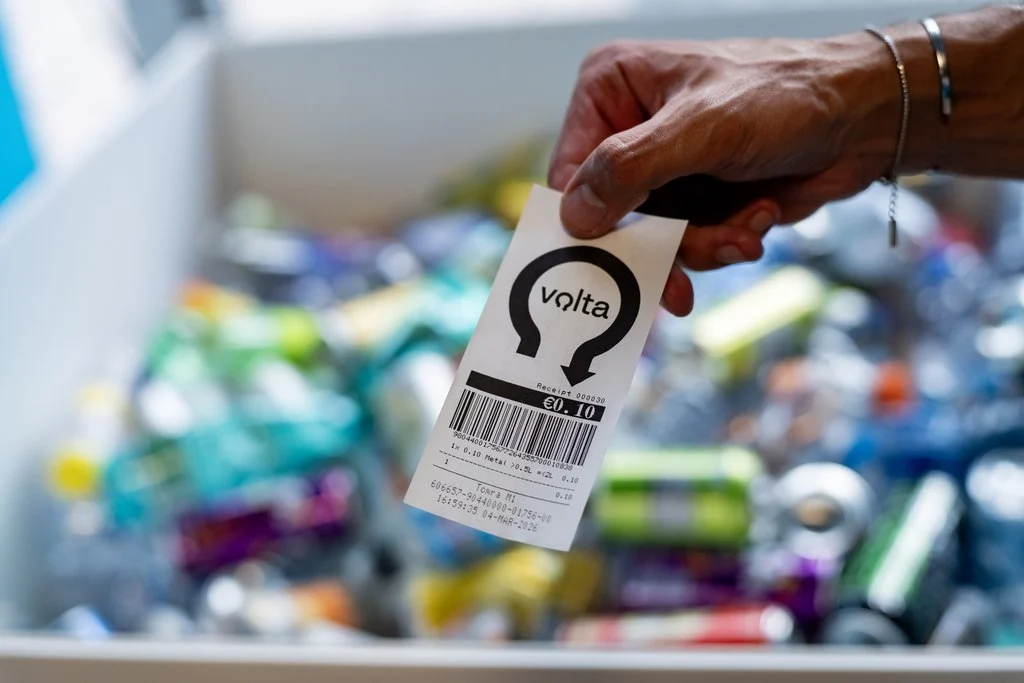
One of the main questions continues to be related to the nature of the 10-cent deposit. It is important to emphasize that this amount is not an additional packaging cost nor an increase in the product price: it is an amount that the consumer pays at the time of purchase and is fully refunded when they return the packaging to a collection point; in other words, the deposit acts as a guarantee.
The goal is to create a simple economic incentive to ensure that packaging enters a dedicated collection circuit, that is, one exclusively for this type of packaging, thus guaranteeing a higher quality of recycled raw material and promoting a true circular economy.
It is also important to distinguish the responsibilities of each party involved. The retailer collects the deposit amount at the time of sale and ensures its reimbursement when the packaging is returned, according to the model applicable to the return point. The overall management of the amounts and the deposit and reimbursement system is ensured by SDR Portugal, within the scope of return management.
For citizens, the fundamental message is therefore simple: the 10 cents are not lost nor do they represent a definitive cost; they are a refundable amount associated with the return of the packaging.
We continue to work on this message in our communication because, being a new system, it's natural that there are questions. The clearer the functioning of the deposit and reimbursement system is, the easier it will be for citizens to integrate the return of packaging into their daily habits.
“Implementing a system of this size naturally requires a learning and adjustment process. As return volumes increased, it became possible to identify different operational needs, ranging from the capacity of collection points to logistics and the handling of large volumes.”
After being accepted at the return point, what path does the packaging take to be recycled? Who is involved in each stage and how is the traceability of the material ensured?
After being accepted at the return point, the packaging enters its own collection and forwarding circuit. Logistics operators ensure collection at the different points and transport to the Counting and Sorting Centers in Benavente and Valongo.
In these centers, packaging is counted, sorted, and separated according to different material streams, and subsequently sent for recycling.
SDR Portugal coordinates and monitors this entire process, bringing together the different stakeholders – return points, logistics operators, and Counting and Sorting Centers – to ensure the continuity of the process from return to forwarding for recycling.
Traceability is ensured through information systems associated with the return process and the identification of packaging via the EAN-SDR code, which allows for the identification of packages covered by the system and the tracking of the different operational flows.
Thus, returning the package to a collection point or kiosk is only the first step in a circuit designed to ensure that these packages are collected, counted, sorted, and sent for recycling, transforming what was waste into a resource that can re-enter the circular economy. Ultimately, the system allows for more recovered material, more resources utilized, and less consumption of virgin raw materials.
Collecting packaging is one step in this process. What results have you been able to present so far regarding the effective recycling and incorporation of the material into new packaging? How do you verify this destination?
Collection is the first step in a process that culminates in the valorization of the material. After collection, the packaging is sent to SDR Portugal's Counting and Sorting Centers, where it is counted, verified, and separated by material. Subsequently, it goes to specialized recyclers, who transform this material into high-quality recycled raw material.
As this system began operating in April, it is still premature to present consolidated results regarding the incorporation of the collected material into new packaging. This process takes place at a later stage after collection and involves different stakeholders.
What we can guarantee is that the system was designed to ensure a dedicated flow of these packages and create conditions for obtaining high-quality recycled raw material, which can be reintegrated into the food supply chain, namely through closed-loop recycling processes, such as bottle-to-bottle for PET and can-to-can for aluminum.
SDR Portugal tracks the material's journey through the various stakeholders and ensures it is sent to specialized recyclers. More than just measuring how many packages are returned, the ultimate goal is to guarantee that these packages are effectively transformed into recycled raw materials and return to the economy, contributing to increasing the circularity of materials and meeting European collection and recycling targets.
What specific contribution can the time Is it possible to improve packaging management in Portugal, and how does it integrate with other collection systems? What challenges continue to require complementary solutions?
The initiative introduces a significant change in the management of beverage packaging in Portugal by creating a dedicated flow for the packaging covered by the system, allowing it to be collected separately and sent for sorting and recycling.
The return process does not replace other selective collection systems. It complements them by removing a specific category of packaging, namely beverage packaging, from the general waste cycle and by creating its own return mechanism with associated economic incentives. The other waste management streams remain essential for packaging and materials not covered by the system.
The main challenge, therefore, lies in ensuring that the different systems work in a complementary way and that each stream is used for the type of packaging it is intended for. At the same time, we will continue to work on expanding the network, improving the return experience, and raising consumer awareness so that the new behavior becomes established and the system can fulfill its full collection and recycling potential.
Looking at other European countries at a similar stage of implementation, how do they frame the Portuguese evolution? What lessons did they learn and what had to be adapted to the national reality?
The evolution of the return process in the first few months is quite positive and is on par with the results recorded in other European countries at comparable stages of implementation. The volume of packaging already returned and the collection rate achieved demonstrate a very significant uptake by citizens of the new system.
The experience of other countries was important in identifying best practices and anticipating challenges, but there is no single model that can be replicated. In Portugal, it was necessary to adapt the solution to the characteristics of the market, consumption habits, and the distribution network, through a combination of automatic return points , manual return points , return kiosks , and a voluntary network.
One of the main lessons learned is that implementing a system of this size is an evolutionary process. The data and experience from the first few months allow us to identify needs and adjust operations. The results achieved show that Portugal is keeping pace very positively with the evolution of other European markets, and it is now essential to consolidate this trajectory and continue to improve the returns experience.
“A time It does not replace other selective collection systems. It complements them by removing a specific category of packaging, namely beverage packaging, from the general waste cycle and by creating its own return mechanism with associated economic incentives.
After these first few months, what are the priorities for consolidating the system, and what concrete goals are being set for 2027? What will be required from industry, retail, and other partners to achieve them?
By 2027, the main challenge is to move from a start-up phase to a maturation phase of the system. This means continuing to expand and optimize the network, keeping pace with the growth in return volumes, improving the customer experience, and strengthening communication about the return process.
We also have a very clear medium-term goal: to reach a collection rate of 90% by 2029. The results achieved in 2026 give us a very positive basis for this path, but we know that reaching ever higher collection levels requires a continuous effort from the entire chain.
From the industry, we need to continue working on making the covered packaging available and ensuring correct identification in the system. From retail, we need an increasingly accessible return network capable of handling volumes. And from all partners, we need to continue improving the operation and user experience of the system.
The goal for 2027 is, above all, to grow what is already working, correct what can be improved, and make the return process an increasingly natural routine for citizens.
“We have a very clear medium-term goal: to reach a collection rate of 90% by 2029. The results from 2026 give us a very positive basis for this path.”