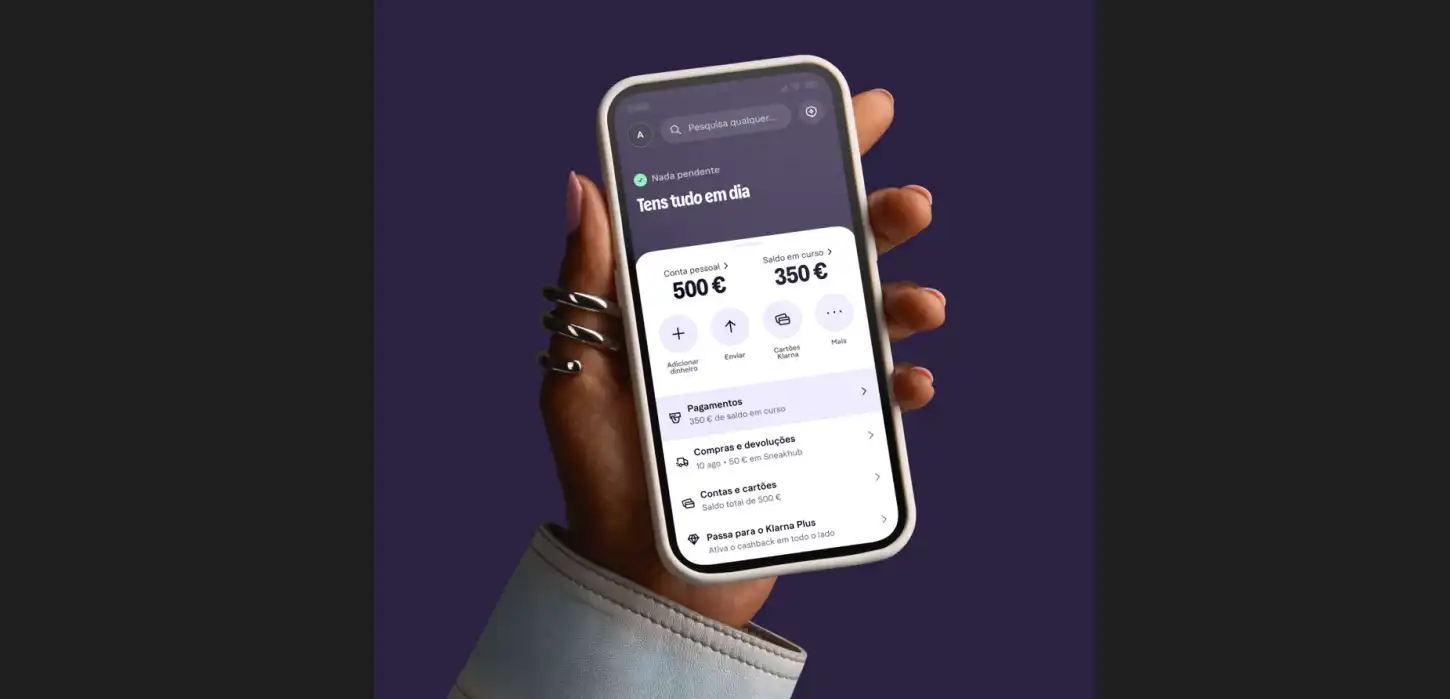
Around 73% of Portuguese people think about money at least once a day, and almost a third do so four or more times daily. The data comes from a study by Klarna , developed in collaboration with the mental wellness app Headspace, which analyzes the relationship between financial clarity and life satisfaction.
Money emerges as a frequent concern, second only to family, mentioned by 45% of respondents. Financial issues occupy their minds mainly during shopping (33%), at work or while studying (20%), and when trying to fall asleep (19%).
The study "The Clarity Effect ," conducted by behavioral scientist Paul Dolan of the London School of Economics and Political Science, concludes that income predictability and the ability to cope with unexpected expenses are more strongly associated with life satisfaction than income level alone.
In Portugal, 88% of respondents say they would feel more prepared to face an unexpected expense if they knew their financial situation precisely. The same percentage prefers to know the total cost of an expense in advance, even if it is higher than desired. Meanwhile, 89% say they would be better prepared to deal with an urgent repair if they had that information.
Managing finances also impacts spending. According to the study, 61% of Portuguese people have spent more than planned on an outing or event, such as a wedding or a concert. In 34% of cases, this happened on several occasions.
More time to rest and be with family.
Having a clear overview of finances can help free up mental space for other areas of life. Among the Portuguese, 44% would like to dedicate this extra time to resting and disconnecting, 37% to being with family, and 30% to taking care of their physical health and fitness.
Furthermore, 71% say that a better understanding of their financial situation has already helped them find more creative solutions to achieve their goals. Among people who go on vacation, 76% say that knowing their financial situation before leaving allows them to think less about money during their time off.
For Paul Dolan, financial control doesn't mean giving up leisure time. On the contrary, knowing your financial situation can reduce worry and allow your attention to focus on other experiences.
4 habits for better money management
The study points to four practices that can help increase financial clarity: gathering income, expenses, and payments in one place; setting a budget and tracking spending; anticipating costs by requesting quotes whenever possible; and establishing regular times to review accounts.
The research, however, highlights the difference between monitoring finances and constantly checking bank balances. Frequent account checks were associated with higher levels of worry, rather than greater happiness.
The conclusion presented by Klarna is that knowing one's own financial situation can contribute to a greater sense of control, helping to manage unforeseen events and make decisions with more confidence.
Exclusive
The consumer study was commissioned by Klarna and conducted with a nationally representative sample of 1.000 adults in Portugal. Fieldwork took place between September 19 and 25, 2026. The research was conducted using 3Gem's own panel, composed of participants previously recruited through a double opt -in process , with their identity verified twice. 3Gem follows MRS standards and is a member of ESOMAR, BPC, and GPQ.
Advertise with us!