Artificial intelligence is evolving from a support tool to systems capable of autonomously planning, deciding, and executing actions in supply chains. The “DHL Logistics Trend Radar 8.0” points to agentic AI , AI-supported commerce, the computing capacity economy, and humanoid robots as trends that could transform logistics in the next decade.
Among the trends identified, agentic AI stands out , considered one of the areas with the greatest potential impact. Unlike previous generations of artificial intelligence, which focused primarily on responding to requests or analyzing data, these systems can plan, make decisions, and act autonomously to achieve predefined objectives.
In practice, this evolution could make supply chains progressively more autonomous and adaptable. The combination of AI with advanced data analysis tools allows for the identification of patterns, anticipation of disruptions, prediction of outcomes, and the recommendation or execution of measures in real time.
Among the applications mentioned are anticipating stock shortages , altering transport routes in the face of unforeseen events, or adjusting transport capacity based on demand.
“Supply chains are changing faster than ever, as AI and work-related trends influence each other ,” says Katja Busch, chief commercial officer at DHL and head of DHL Customer Solutions & Innovation.
Commerce with AI and humanoid robots are among the new trends.
The report also identifies emerging trends associated with the expansion of artificial intelligence beyond operational efficiency. One of these is AI-powered commerce, which could change how consumers and businesses discover, select, and purchase products. Another is the so-called computing capacity economy, which highlights the strategic importance of IT infrastructure and the logistics associated with data centers.
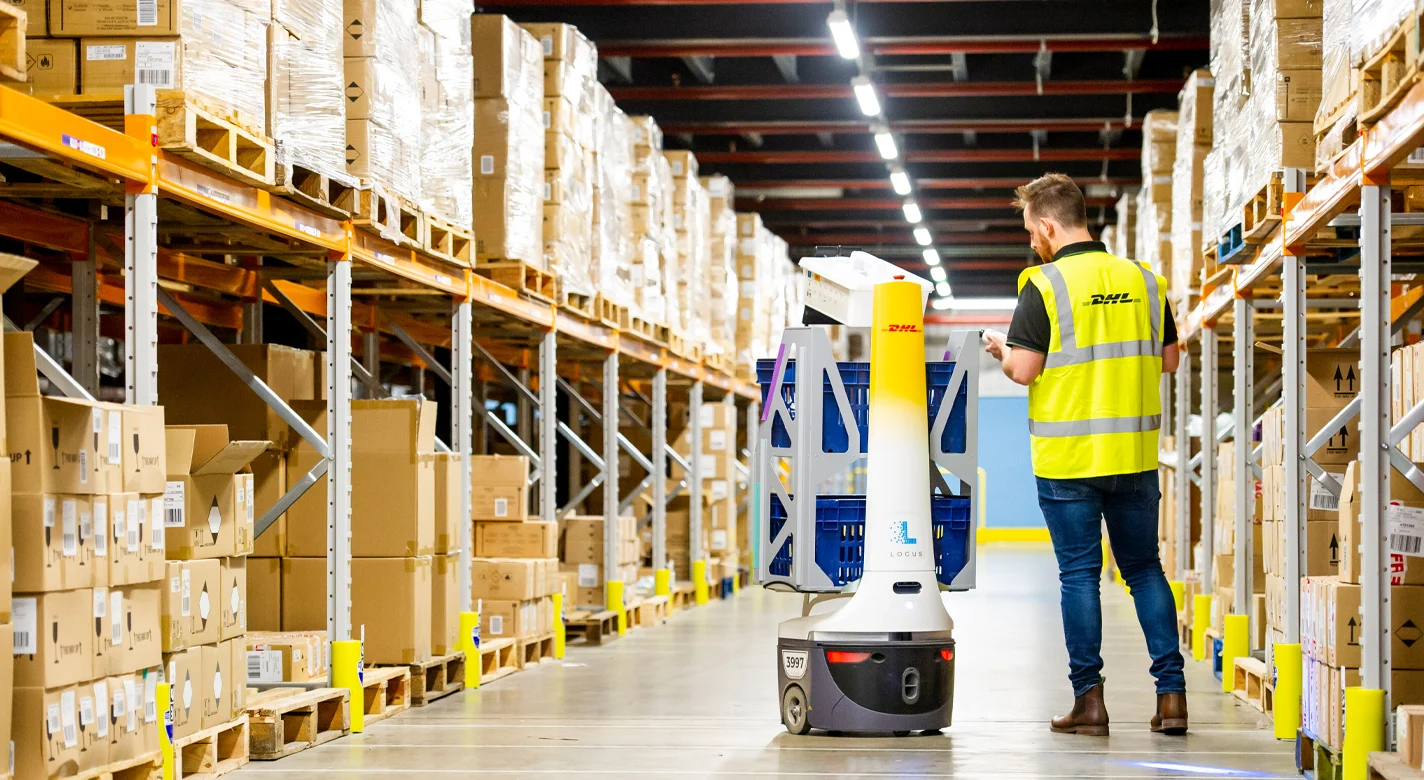
Humanoid robots are also emerging as a trend, although with a longer adoption horizon. DHL believes that these technologies could redefine the automation of tasks in physical environments, particularly in warehouses.
“Until now, AI has helped people perform tasks more efficiently. The next step is action execution,” explains Klaus Dohrmann, Vice President of Innovation and Trend Research at DHL Customer Solutions & Innovation.
According to the official, logistics is entering a phase of "autonomous and physical AI ," in which intelligent systems are beginning to perceive the environment, move through complex spaces, and make decisions with less human intervention.
People remain at the heart of the logistics.
Despite increasing automation, the DHL Logistics Trend Radar believes that people will continue to play a central role in logistics operations.
Wearable sensors, remote operations, collaborative robots, and AI-powered work assistants are among the technologies that could contribute to safer and more productive work environments.
By taking on repetitive tasks or supporting day-to-day decisions, these tools can allow workers to focus on higher value-added activities, such as problem-solving, customer service, or overseeing operations.
Technological evolution will, however, impact the skills required. Hundreds of roles, from field operations to technical and specialized professions, could be transformed by the increasing use of AI assistants, collaborative robotics, and digital tools.
For companies, the challenge will therefore involve not only adopting the technologies, but also preparing their teams to work with them.
“Technology is transforming the way we work, but people remain the driving force behind all successful supply chains,” says Thomas Ogilvie, chief human resources officer of the DHL Group.
Security and governance are keeping pace with the evolution of AI.
The responsible use of artificial intelligence is another area highlighted by the report. As systems gain greater autonomy in processes such as demand forecasting, inventory planning , or transportation decisions, issues related to safety, transparency, and human oversight become more important.
Ethics in AI and cybersecurity 2.0 are therefore among the trends analyzed in this edition of the radar, at a time when companies are seeking to reconcile technological innovation with governance mechanisms and protection of operations.
Sustainability also maintains a central position in the transformation of logistics. Decarbonization, sustainable fuels, circularity, and the electrification of heavy and light vehicles continue to be among the developments monitored by DHL.
The “Logistics Trend Radar” is developed by DHL Customer Solutions & Innovation in collaboration with experts from the business, technology and academic sectors and seeks to identify the trends most likely to influence logistics and supply chains over the next decade.
Advertise with us!